Contents
Part One: The Classical Bandhas
Mula Bandha: Muladhara Chakra (Brahma Loka)
Uddiyana Bandha: Manipura Chakra (Vishnu Loka)
Jalandhara Bandha: Vishuddha Chakra (Rudra Loka)
Traya Bandha (maha bandha)
Utilizing the Three Basic Bandhas with the Breath, Pranayama and Advanced Mudra Practice
Part Two; Adjunctive Bandhas
Jivha Bandha, Khechari Mudra and Talu Chakra
Conclusion: Paramananda Bandha
There are three classic bandhas; mula, uddiyana, and jalandhara bandha. When practiced together they are called tri-bandha. They are practiced together or individually at specific times during kriya, asana, pranayama, mudra, visualization, dharana (concentration), and meditation (dhyana) practice. They also occur spontaneously especially in children, but also in yogis who allow themselves to be moved by the evolutionary transformational intelligent force, the kundalini. Once thoroughly familiarized, they are integrated into daily life and dream time -- integrated 24//7.
When the vital life force is not wasted or dissipated into external neurotic compensatory pursuits of fragmentary existence, but rather remains in synergistic harmony with all of creation and its beginningless source, then friction, imbalance, and effortful force is spontaneously replaced by the innate effortless and powerful force aligned with natural law. May that force always be known, respected, honored, listened to, and guide our way. It would be a very rare human being who has not become conditioned outwardly so that their energy is dissipated or misdirected, although at birth these areas where the bandhas are configured by one's innate wholesomeness wholistically are often intact and functional automatically. Because of negative conditioning the conscious practice of hatha yoga bandhas becomes very useful. Others who are already naturally/spontaneously aligned, will feel little effect from the practice.
What the Bandhas do
Let us once and for all abandon the definition of bandha to mean contraction, tightening, or lock. A better translation would be valves, gates, or doorways, because they direct the internal energy flow to irrigate the nadis, open to continuous flow, activate the energy body, and align it with all-creativity.
Another reason why we will try to avoid the translation of bandha as "lock", is because the word, lock, may reinforce the forceful approach where injury or disease is more likely to occur. Lock often denotes holding back, tension, rigidity, or blockage; while what we are attempting to affect is flow, openness, and fluidity. For example, instead of approaching bandhas as containing, locking in, or damming up the internal energy, it may be wise to approach it as moving energy through, a relaxation of a blockage or stressed situation, while irrigating the thirsty soil or opening up obstructed and dormant veins, channels (nadis), and circuits (chakras). Eventually, the implementation of bandha has to be effortless and natural. We assume that this homeostatic wisdom is innate, but has simply become obscured, hidden, and forgotten through generations of institutionalized ignorance and disempowerment, which has distracted human beings from their natural powers and their true harmonious embodied relationship. Bandhas used in synergistic conjunction with asana, pranayama, mudra, visualization (dharana), and meditation (dhyana) practices act as a powerful synergistic aid.
Let us look closely to what a bandha is. To implement a bandha means to gather together, bind together, to connect, to connect two or more disparate parts together into a circuit, to establish flow or a connection, to integrate and defragment, to seal a distractive leak, to gate, re-direct, to loosen or liberate preexisting blocked or repressed energy, to coalesce and energize. Bandhas are loci of focus that connect one's attention to the energetic dynamics of both internal dynamics and external dynamics. Bandhas as a procedure acts as a connecting valve that directs the biophysical flow of biopsychic energy in the bodymind. Energy which may be leaking, blocked, dissipating, or out of synch is reconfigured back into its original natural alignment. A bandha acts a bridge or bond between two or more disconnected parts. The process forms a bounded gate, a valve, or levee. On a coarse general level it is accessed through a subtle physical movement such as mulabandha, uddiyana bandha, jalandhara bandha, etc. In more subtle usage it connects and gathers together the energy circuits of the psycho-physical bodymind. Bandhas in hatha yoga are the outward representations of pranayama, pratyahara, and dharana. It remedies chronically unintegrated and distracted energetics, while allowing us to re-energize/reconnect and align with our original nature and its source. It is essentially a technique of relaxation/release of stuck energy so that it can be recycled into the great integrity -- its natural place. On a physical level, bandhas involve two or more “points” where an energetic relationship is made consciously mutually synergistic. It brings prana into the bodymind and initiates flow.
Because the body, mind, and natural evolutionary phenomena (creation) exist in an energetic relationship, working in conscious attention with the bodily gates (bandhas), will provide a suitable home repository for the living creative spirit. Bandhas direct the energy flow (prana) inside the bodymind, so that blockages of dammed up and repressed energy are alleviated, areas starved of prana are nourished, and the life force energy (prana), which may tend to leak out because of dissipative habits are rearranged, harmonized, activated, and integrated.
Bandhas thus bind back the dissipative energetic that are fragmented, integrate these isolated circuits within the wholistic bodymind context, irrigate the internal energy channels which activate the internal harmony of the nervous system, organs, glands, tissues, and cells, and, as such; the embodiment aspect of pratyhara (restraining the dissipating outward flow of prana while bringing it back to be redistributed from the core center of creativity in order to achieve union and harmony in the core center) is culminated as the integration of body, mind, and the creative/evolutionary energetic original source.
At first, bandhas often is learned as a coarse physical procedure utilizing muscles, massage, and physical movement, because most have already become estranged and numbed out from our natural subtle innate inter-connections with the body and with the material/physical world. Eventually the yogi becomes aware of the underlying neurophysiological, mental, energetic patterns, internal channels, and circuitry underlying the physical; hence, the bandhas are effected by awareness and mental alertness in the intermediate state. Eventually they are effected spontaneously and naturally (sahaj) and continuously (not only in daytime sadhana, but in sleep and in All Our Relations.
Bandhas are internal energy valves, connection points, or gates, which when activated allow the energy to flow through the bodily vessel activating the dormant potential of embodied spirit. Another way of stating this is that the undesirable dis-eased stagnant rigidity of a state of chronic spiritual disconnect can be disrupted through the intelligent use of bandhas, pranayama, and pratyhara providing the pathway for flow -- the ongoing everpresent spiritual reconnect of the great expanse of being.
Bandhas, thus bind and redirect the evolutionary/creative energy from leaking out; but it should never be viewed as a muscle contraction. So here the definition of bandha will be effectively used in terms of an interlock (to lock in and interconnect inner systems), rather than as the more common definition of a "lock", which carries with it a negative connotation of locking out, damming up, restraining, constraining, forcing, excluding, repressing, etc. Bandhas are thus energy gates/valves or connection points that connect and harmonizes one's vital energy (prana) with the inner constellations (microcosm), the outer constellations (macrocosm), and the universal eternal source of all energy (the hologram). In order to learn about this activation and harmonization, we have to learn about the subtle energy, inside, outside, and non-dual unborn Source (the inherent original potential energy within all things). But like asana practice, also in bandha practice, we can learn about the subtle internal energy, by first performing the physical, coarse, and external aspect (coarse energy). Then later once we become more aware of the presence of the internal and more subtle energetics, we can forgo the coarse, gross, physical learning tool. Knowledge of the energetic template (microcosm) effects its natural union with the macrocosm, which has become disrupted through negative conditioning.
The underlying fifth limb in ashtanga yoga, pratyhara, in turn acts similarly as a powerful vehicle for tapas (increasing the spiritual fire) and is its energetic counterpart (energy patterns) as our energy patterns are no longer dissipated nor distracted into dualistic externalizations or pursuits (mentally, physically, or energetically). As such, pratyhara is the general operating principle while the specific bandhas work at specific energy circuits. It is cogent that pratyhara is not merely the withdrawal of the senses from the sense objects, but the withdrawal from dualistic subject/object foolishness. One aspect of pratyhara and bandhas may look like a withdrawal, but the complete bandha and pratyhara manifests as a re-direction from the true nature of mind, the Divine purusa where we become instruments (hands fet, and all the organs) of the infinite fountainhead of love and delight. The activation of the bandhas which will be shown later, not only affect the body and the energy, but thus also the mind and spiritual centers because the mind rides on the horse of wind (prana), just as the winds (prana) are affected by the mind. Hence through the bandhas as an integrated practice, the yogi learns how the mind affects the body and prana, as well as how the body and pranic circuits affect the mind. Philosophers might be skeptical the the latter statement, but it is common knowledge that being drunk, taking drugs, not having good sleep, food, lack of exercise, and organic disease most often negatively affect the normal person's mental and/o emotional ablatives and function. So too do positive physical activities positively affect the mind, mental abilities, and emotions.
The practice of pratyhara thus reverses the outward flow of mind that is often sucked into illusory world patterns where the data from the senses misinterpret the true meaning of their "objects" -- where objects appear dualistically as separate from self, i.e., the limited egoic world of I and it. Because the mind cannot move without prana, bandhas are utilized to efficiently and quickly reverse the outward flow while activating inner evolutionary flow and thus bandhas (wisely applied) have the ability to quickly establish the objectless meditative state and inner supportive energy flows necessary to create synchrony with natural evolution and thus propel the yogi into turiya or samadhi.
Just as it easy to view pratyhara or vairagya only in its withdrawal aspect (rather than as a descent of grace), so too it is more valuable to view the implementation of the bandhas more than as a withdrawal, but a redirection and activation of energy flow, which has an innate intelligence at its ultimate Source. Yogic processes are always moving us closer in alignment and synchronicity with this Source energy. Thus bandhas activate and catalyze the healing energy vortexes within the body/mind which have previously become abandoned or obscured. Bandhas can be implemented consciously through a conscious hatha, kundalini, or laya yoga practice, but are also often performed naturally and spontaneously through grace ( as a result of fortuitous action or karma). Bandhas then can be the spontaneous co-arising intrinsic result of the creative and evolutionary activity which acts both endogenously as well as throughout all of nature (see maha ananda bandha at the last section). .
Although at first bandhas are most commonly described in anatomic terms in relationship to certain body parts, muscles, glands, and organs, this can be misleading. It is far more valuable to approach them as connection points in which flow can be re-established -- as internal energy re-configuration loci, which in turn creates the key points in a template or energy pattern/grid that aligns and activates a corresponding physical, emotional, psychic, and spiritual constellation and circuitry. As such it not only restrains or binds/bounds the dissipation of energy outward or often downward, but rather redirects and provides the feed in a healing and energizing direction -- tuning and aligning the body/mind with the evolutionary energy of the back body, energy body, vajra body, light body, or rainbow body potential -- as a whole system constellation, moving the energy non-dually - destroying superficiality while bringing the practitioner into deeply meaningful dharmic coursings.
For the average neurotic it will at first help withdrawing from the "external sense world" moving cit-prana inward and upward, activating, and catalyzing the inner alchemical transformative processes associated with the nadis (energy channels), chakras, the central core channel sushumna (the central channel), and the core energy (kundalini), so that we may abide in our natural pure intrinsic natural state (swarupa). In this respect the bandhas are also associated with the evolutionary progression through the granthis (knots) and lokas (spiritual realms) which will be discussed later.
This is part of the process of reclaiming our innate inheritance and power which has become repressed through many years of negative conditioning. But in order to maintain context and perspective and to avoid becoming stuck in the preliminary process (where many rules supercede awareness), it also must be kept in mind that ultimately the energy direction is neither exclusively inward nor outward, neither just upward nor downward, left or right, but rather non-dual as in a pulsation (spanda). It is a going out to Source and flowing back from Source through creation simultaneously. Through witness (purusa) consciousness we may have perspective to see our actions, our mind streams, our situation in mindfulness and self awareness, but at the same time even though it is a broader context of awareness, it is still limited vision. But who is that purusa (silent witness) who is watching in pure open awareness? Here the terms outer and inner lose their meaning in universal awareness.
The bandhas are mastered by awareness and praxis.
This awareness is gained through the practice of mindfulness and vairagya implemented simultaneously. When the bandhas are mastered, free flowing progress in realizing the intent behind asana, pranayama,
mudra, and meditation are greatly accelerated with the result allowing us to
abide in the heart of samadhi faster, easier, longer, and more completely.
The bandhas are associated with the three granthis (knots) and as such provide
the motive power to unlock spiritual dimensions or lokas as well (Brahma Loka,
Vishnu Loka, and Rudra Loka or Nirmana Kaya, Sambhoga Kaya, and Dharma Kaya).
Thus the three classic bandhas of mulabandha uddiyana bandha, and jalandhara
bandha, can be said to provide the keys to unlocking these three granthis, respectively.
The following description is coincident with the esoteric tradition of hatha yoga (three bandhas). Here will be introduced the idea that there are many bandhas, each one capable of moving the energy upward (or restraining its downward motion) to the next chakra. When yogis enter sahaj samadhi these bandhas occur naturally and are mutually synergistic. The mulabandha connects us with the earth energy, grounds us, moves the earth energy up from the muladhara chakra to the swadhistana (or otherwise prevent it leaking out the muladhara) while moving the sky and sun energy down to connect with the earth. A non-dual synergistic co-mingling (or synchronization) is realized between body and mind, between sky and earth, crown and root. For the fortunate, duality is destroyed
Likewise swadhi bandha connects the energy from the swadhistana chakra up to the manipura chakra and down to the muladhara chakra. Uddiyana bandha moves the energy up to the heart (anahat) chakra and down to the swadhistana connecting these regions. Hri bandha moves the energy up from the heart to the throat chakra and down to the manipura. Jalandhara bandha moves the energy up to the third eye from the vishuddi (throat) chakra and down to the heart (anahata chakra) or air center. The ajna bandha moves the energy up from the ajna chakra to the crown (sahasrara) and down to throat (vishuddi).
Swadhi, hri, and ajna bandhas have not been previously detailed in classical hatha yoga literature as such, but none-the-less their discussion will also be presented. In one sense there exist a myriad of bandhas in the human body as well as throughout the universe. In the body minor bandhas can be said to exist at each synapse, cell, vein, ganglion, organelle, etc. Together they form bioenergetic and biopsychic circuits. Their synchronistic efficacy need only be explored and experienced by anyone pursuing authentic hatha yoga sadhana. For most practitioners the bandhas are most efficacious when practiced from the bottom up, having formed a firm base at the root (base) chakra – the muladhara first.
Yoga Nidra: Relaxation of tension/contraction points
A synergistic and parallel process is yoga nidra, where the entire body is relaxed, the energy channel opened, and reconfigured affecting continuous flow. There are different approaches to yoga nidra practice available to a yogi. Bandha practice can be viewed as an active facilitation of this alignment and harmonizing state. They work synergistically. Thus, bringing one's attention to the bandha connection points and opening up the valves so located can be facilitated like yoga nidra practice.
In summary, taught in this way the bandhas are energy valves/gates, not muscle
contractions or locks. They are locks only in that they prevent the energy from being
dissipated or distracted at various key energy centers. They are more valves/gates in the sense
that they redirect these energies from being dissipated into
activating the inner circuitries at these centers and breaking up the knots
(granthis). As such many hatha yogis teach the bandhas as the means to breaking
through the granthis which in themselves operate not only in the body/mind/energy
fields, but in the more subtle realms of vijnanamaya (higher transpersonal non-dual wisdom) and
anandamaya koshas (the spiritual reams).
In hatha yoga and pranayama the bandhas should be taught first, being the basis for the correct positioning of the postures. The bandhas correct the asana, while the asanas refine the practice of the bandhas. Even though the beginner will have to approximate their understanding of it, in this way their energy awareness will grow and injury will be prevented through learning how to acknowledge, respect and honor prana (vital energy).
As we progress in this awareness or energy wisdom (awareness of the cit-prana), the more subtle internal energetic forms are naturally integrated and put to use, while their coarse, gross, and external form are then no longer needed. Some people do not need to go through the coarse form ( for example through grace, karma, natural propensity these mudras, bandhas, and kriyas manifest naturally (sahaj). Thus the yoga kriyas can act as a powerful synergist to break up previous negative programming (samskaras) imbedded in both the psychic and cellular tissue. This is further explained in http://www.rainbowbody.net/Purity/Kriya.htm and elsewhere.
Mulabandha: Muladhara Chakra and Brahma Granthi
The root (mula) lock moves the earth energy in and up through the muladhara chakra system connecting above it to the water chakra (swadhistana) and further upward to beyond the sky, while also serving as the valve connecting sky energy, spirit, and awareness below to creative embodiment. This is more than a non-dual two way street; but rather the mechanism where the essential vital energy integrates with the timeless evolutionary energy. This is the profound subject of ha-tha (sun and moon) yoga alchemical integration.
Mula bandha keeps the energy flowing between the body and the earth in a non-dual direction (neither only up and in, nor exclusively down and out). When the apana (the downward moving, cooling, and purifying energy) that normally moves within the ida nadi (psychic nerve channel) is synchronized with the prana (the upward moving energizing and activating energy) that normally moves through the pingala nadi (psychic nerve), then the unification/integration that connects the earth energy of embodied existence (at the muladhara) with the unborn formless realm of sky (at the crown of the head) occurs in perfect balance (sattva) allowing the healing energy to flow in the sushumna nadi (psychic nerve).
The muladhara chakra (psychic plexus) is the most mysterious and poorly understood chakra in hatha, kundalini, and tantric yoga. It is where dormant potential of the human animal power resides; and it is from here the kundalini becomes activated and enters into the central channel (sushumna) connecting with and activating the super-conscious network for living embodiment. The lights go on, so to speak! This is not some archaic myth or fantasy, and should not be ignored nor demeaned' but rather its knowledge is essential to success in authentic hatha yoga. Mulabandha, once mastered, is designed to keep this energy flowing in this region free from distraction and dissipation. Indeed, when the mulabandha is lost, our grounded feeling of centeredness in the body and the planet becomes lost or distorted. Our physical mode becomes somewhat dysfunctional and clouded, lacking vitality, vividness, true conviction, and inspiration.
Here, it is noteworthy that in yogic literature, the goddess kundalini is pictured as lying dormant in the muladhara chakra in the form of a serpent coiled three and a half times around a lingam. The symbol for this chakra is a downward facing triangle normally, but when the chakra is activated (by an activated kundalini) the triangle reverses upward pointing! In this sense the bandha does act to bind the outflow, but moreover to activate/empower the integrative power.
Mulabandha is used in conjunction with the rest of the bandhas, in asana practice, pranayama, mudra, pratyhara, dharana, tantra, and dhyana practice. It occurs naturally in samadhi.
Preparation: The classic gross physical preparation for mulabandha is aswini mudra in order to purify and tone the nerves, glands, and muscles of the area. In mulabandha, however the difference between it and aswini mudra is distinguished where the anus/rectum is not activated/contracted as a whole, but rather focus is directed at the tail bone, the bottom of the perineum, and the lifting of the torso off the pelvis in a single integrated movement.
For the male it occurs as an inward and upward lifting or draw at the space about one inch superior to the perineal floor, the pelvis forms as a stable base, and the torso lifts. On a gross level it is recommended that the practitioner massage the perineal space (directly posterior to the genitals and anterior to anal sphincter) in order to become more directly familiar with it. This may seem repellent to those who have become conditioned to dislike natural function or find it unclean, inferior, or unspiritual; however, this is truly an advanced practice, suitable for best of yogins. In Chinese medicine, this is Conception Vessel 1 (CV 1) point in acupuncture. Here, the CV 1 point moves upward (superior) as Governing Vessel point 1 (GV 1) moves downward toward (see acupuncture charts). This is Huiyin (Chinese, while the english translation is Meeting of Yin point. It is the intersection point of the CV, GV and Chong Meridians. The Governing Channel 1 point (GV 1), called, Chang Qiang located midway between the tip of the coccyx bone and the anus simultaneously connects toward CV 1.
Through mulabandha, the perineal space becomes subtly indented, domed upward, soft, and capable of being drawn in and up simultaneously with the lift of the torso off the stabilized pelvic base. This also creates an open/empty space for the front of the pubic bone and sacrum to move toward each other. It is similar for the female except that the bottom of the action occurs higher up near the cervix being drawn up and in to use bony parts as reference points. A more accurate descriptor is that the fascia immediately posterior of the genitals move toward the anus, while the fascia anterior to the anus moves toward the genitals, simultaneously as the perineum is drawn upward and inward. The motion is more energetic in nature than physical and is perfected when the point immediately above the genitals (at the bottom of the pubic symphysis and the point directly posterior to the genitals (the anterior portion of the perineum) are brought together toward each other and connected. That forms a bottom cup, lift, and support preventing outward flow (dissipation). This stabilizes the entire pelvis and spine.
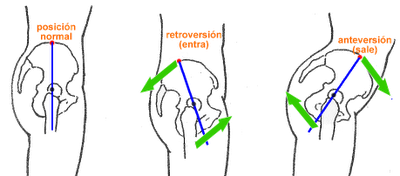
Here we are *not* describing the normal pelvic tilt, which are either anterior or posterior rotations of the pelvis (anteversion/retroversion), which occurs between the femoris and pelvis and/or between the trunk and pelvis; but rather mulabandha occurs deep within the moveable elements and energetic dynamics of the pelvic girdle itself. It is an energy dynamic more than a muscle movement that aligns the front of the anus (perineum) with the lower reaches of the sacro-coccygeal plexus), the end of the spinal cord (the cauda equina), the front of the body at the pubic symphysis, the lower abdomen, the heart, throat, the pineal, and the total integration and alignment with the crown chakra. Having said that, a slight forward tilt (anteversion of the pelvis) while simultaneously indenting the front of the perineum with the point immediately below the pubic symphysis simultaneously will be helpful for most. In short, the pubic symphysis does not tilt up, in relation to the perineum and tailbone.
It might be sufficient to point out that aswini mudra, vajroli, and sthula basti are only preparations to achieve purification, basic awareness, and getting in conscious touch with this much maligned area, while moving the energy in the pelvic and urogenital diaphragms (root chakra and water chakra areas). In other words these practices are only preparatory in order to help the practitioner to get in touch with locked and stagnant energy, rigidity, frozen stagnation, and then to activate this very important center. In that sense these are kriyas (preparatory purification exercises). Perineal pressure point massage is a more excellent adjunct. This is Conception Vessel 1 (CV 1) in acupuncture. Here, the CV 1 point moves upward (superior) as Governing Vessel point 1 (GV 1) moves downward and toward each other (see acupuncture charts).
Hence, the actual bandha does not require strength in the pubo-coccygeal muscles (PC muscles of the famous Kegel exercises), nor does it require strength in the levator ani muscles. More correctly it requires awareness, conscious relaxation of the region, the removal of impurities, irritants, toxins, and energy blocks in the region -- a balanced tonification in the nerves of the area, and a gentle energetic initiation of a movement in the direction explained in more detail below. In the latter regard, the coarse, gross, physical, and external practices of aswini mudra, vajroli mudra, and sthula basti may help at first, but this is so only that we become aware of the more subtle, less coarse, and inner energy dynamics that are involved -- so that the energy can move through this area unimpeded and that the region is strong enough to withstand an increased energy flow such as is demanded in kundalini yoga -- so it is truly balanced, functional, and tonified. In a real sense we are energizing and strengthening the nadis of the region as well as the neurophysiology, and only secondarily the organs, muscles, and glands of the region also become energized, powerful, and capable of vital and healthy support.
Mulabandha occurring slightly in and up from the actual perineal floor, depends upon the energetic relationship between the sacrum/tailbone complex and the urogenital diaphragm (located posterior to the pubic bone region). If we are able to align the pubic bone with the sacrum/tail bone in every movement (whether sitting, standing, lying down, or walking), then we would have a stable and vital foundation in which to develop. We can better now understand how the stable, aligned and energized pelvis in mulabandha supports and lifts the entire spinal column.
To be more exact it is the area associated with the genitourinary diaphragm behind the pubic bone that placed in a mutually synergistic energetic relationship with cauda equina via the upward movement at the perineum (CV1). This vital area is usually very often ignored and devoid of consciousness because of body negative programming. The plan then is to re-energize and fill it with cit-prana. Thus in addition to the classic preliminary exercises of aswini mudra and vajroli mudra, one utilizes acupuncture point CV 1 by taking a clean finger and pressing the area directly in front of the anus and directly in back of the scrotum or lips of the vagina inward/upward (after bathing). A gentle massage of the area that invigorates the area while removing tension or lesions is recommended. See that there is no tension or tightness in this region. Learn to feel and sense this area fully and devoid of aversion or clinging. From an early age these areas become associated with being unclean, unmentioned, and unconscious. Later on this same negative dissociation occurs with the genitals. So here we are also clearing out any childhood negative programming around the earth and water chakras. Younger practitioners may feel temporary sexual stimulation; however it will be found that as the sexual tensions in the region are relaxed, the sexual aspect in regards to desiring an external release will actually be reversed That occurs because the internal yin/yang, sun/moon, male/female, shiva/shakti, or ha/tha pranas are now balanced and integrated in sattva.
Mulabandha will simultaneously draw the pelvis down from the upper torso both (front) and from the spine in back, while balancing left and right wings of the ileum while
the perineal space is drawn upward. Hence, the spinal column actually lengthens through traction in conjunction with jalandhara bandha. As the perineal fascia
do not contract, but rather simultaneously are energized and relaxed,the area is drawn upward. If that area is made
stiff, contracted or hard, it can not be drawn up. Since the bandhas are in essence energy gates, and hence very subtle, that
is why one often starts with aswini and vajroli
mudras, which are practiced first in their coarse aspect and later in their subtle/energetic
aspects. Thus, the practice naturally goes increasingly from the coarse to the
more subtle. If the practitioner is able to become directly aware of the energetic dynamics at CV 1 and GV 1, then that is best. When one naturally resides in an the great expanse (in wholeness and integrity), mulabandha is entirely spontaneous.
Vajroli in its energetic aspect affects the opening of the
swadhistana chakra, so that no energy gets stuck there. It is very valuable that
we do not approach vajroli mudra nor mulabandha (the latter occurs in the muladhara
chakra) as muscle contractions in order to avoid tension, blockage, stress, or rigidity. Indeed genital, reproductive, and pelvic tension must be relaxed, so that the cit-prana can freely flow. Of course "most" movement involves the activation of some
muscles (except movements that take the advantage of the force of gravity) or
relaxation of a previous tense/spastic muscle. ALL MOVEMENT (isotonic activity) involves a corresponding relaxation
of the holding muscle (called the antagonist muscle). For most of us, it is
this relaxation (and resultant activation of the parasympathetic nervous system)
that is key to mulabandha and vajroli. This allows the energy to flow through
this area, irrigating it with chit-shakti. THEN it no longer feels trapped nor
is there a need for it to flow out and discharge its energy once the charge
gets dammed up. This is what gives us "the lift" in mulabandha (at least in part). The assumption here is that a pre-existing chronic tension and blockage has already occurred, hence the release of the contraction will facilitate movement resulting in the restoration of natural harmony.
Since we are addressing specifically mulabandha, the two main points to consider then, are the sacrum/tailbone complex in the posterior of the body at GV 1, and the area posterior to the pubic bone. Through observation one may notice that most adults move their pelvis and sacrum all at once i.e., there is no independent motion of the sacrum and pubic bone from the rest of the pelvis (the innominate bones of the ilea and ischium). Yet closer anatomical study shows that the healthy sacrum is not fused with the pelvis, but forms a joint (the SI joint). Also the pubic rami (left and right) forms a joint at the pubic symphysis. So what happens is that the sacrum/tailbone complex moves down and forward at the same time the pubic bone moves down and forward. These two movements toward each other form the subtle SCOOP or cupping motion of mulabandha. More subtly it is the perineal area moving up as the cauda equina moves down and forward. That gives us the lift.
Moreover the two pelvic wings (os coxae) are designed to move independently from each other; thus the`sacrum and tailbone are liberated. Thus, much of the asanas, kriyas, and mudras are designed to break up the stagnant energy and negative conditioning that unfortunately occurs in the muladhara region. All together a conscious mulabandha informs our asana, pranayama, mudra, dhyana, and daily practice.
Here we can identify at least twelve independent muscles in
ten muscle groups that connect at the sacrum and run across the ileum, ischium,
the back, to the legs, the pubis, and to the tailbone. On the posterior surface
of the sacrum are attached the iliocostalis, longissimus, multifidus, erector
spinae, latissimus dorsi, longus and brevis rotatores. On the lateral surface
of the sacrum, the gluteus maximus attaches, while at the anterior surface of
the sacrum we find the levator ani group, piriformis, and coccygeus groups.
It is valuable to note that the latissimus for example attaches all the way
up into the upper arm. It is not important to break out your anatomy books to
see all the various attachment points, but rather to be able to feel the effects
that the sacral/coccygeal complex has upon the whole body and especially upon
the spine.
Mulabandha thus mobilizes the previously stagnant energy and repositions places
it into its rightful energetic and aligned place. The correct application connects
the front and back of the body, the left and right, the ida/pingala -- it aligns
the spine as well. Although the bandhas are ENERGY valves, this is too subtle
for most, thus the energy is first gotten in touch with through the physical
form of physical movement. So if you follow this so far, then you will be utilizing
your asana practice to go deeper inside -- feel the energy and especially to
feel the synergistic and mutually electro-magnetic polar relationship between the
pubic bone and tailbone. Again this is subtle at first. If one has no conscious memory of experiencing it, then of course one may not even entertain its possibility, but this is how
we grow and learn, entertaining the possibilities, moving from coarse/gross and outer
to the more subtle, energetic and inner. This is very much like pranayama, where
the coarse breath leads us to the energy (prana) awareness and then to communion
the implicate integrating intelligence at the Source of this energy.
So too in mulabandha the tailbone and pubic bone no longer move with the rest
of the pelvis, but rather configure the base of the entire pelvic bowl and spine, where the
physical body moves around that root foundation. Here the tailbone and sacrum
drop at the same time the pubic symphysis drops down -- they both move toward
each other INDEPENDENTLY of the rest of the ileum and ischium, contrary to conventional assumptions. Here, the sacrum moves away from occiput and the entire spine becomes
long-- in traction, while at the same time the torso is lifted away from the
chest and armpits (the front of the heart moves forward and upward). We don't have to know the anatomical terms to know the energy
of mulabandha, but yes it has an anatomical relationship as well. This mulabandha
makes backbends, forward bends, twists, sidebends, contralateral poses, etc.
all work in a functional and energetic alignment, and in turn these poses should
make the energy of mulabandha work with the rest of the bandhas. They are mutually synergistic; and thus,
an energetic partnership is engaged and enabled to complete and fulfill
the practice; all of which is self instructing, if one balances and harmonizes
these energetics with this awareness in mind.
In other words, mulabandha should be found in all poses (unless one rounds the
back). When mulabandha occurs there is less effort and more energy so it is
not a contraction. Physically the fascia (pelvic diaphragm) in the perineum
lose tension and hardness and are able to dome upward but rather a lift up creating
space for the tailbone and pubic bone to move inward toward each other. As this
diaphragm domes upward, the sacrum and pubis drops downward to meet the earth
(if you are standing). So there co-exists both an upward motion and a downward
motion simultaneously occurring. Physically the pubic bone and tail bone no
longer move glued to the rest of the pelvis. Freeing up this motion is the subject
of much "technique" in the kundalini and hatha yoga literature.
A practical example of using mulabandha in a backbend, try cobra (bhujangasana). Laying on your abdomen and front thighs, become conscious of the pubic bone and sacrum. Do not allow the sacrum to lift toward the lumbar, or at the same time do not allow the pubic bone to lift toward the armpits. Both the pubic bone and sacrum do not shift, but rather scoop together at the mula (perineum) creating an inner lift, forming the stable base from which the front and and the back lift from the center. Do not allow the sacrum to lock between the two ilium bones (ilia), to move superior, or tilt so that the tip of the tailbone rises.
Chronic tension of the lower chakras is associated with the dysfunctional tendency to move both the pubic symphysis, tailbone/perineum, and ilia as one unit. In mulabandha, that is not the desired goal, but rather is counterproductive. Rather it is remediated when intra-pelvic movement is reestablished. Specifically the pubic symphysis and tailbone move toward the other (tailbone or pubis), while the two ilia decompress the sacrum. In a characteristically rigidified organism "normally" the public bone and sacrum/tailbone complex will not come together, because the fascia in the pelvis is frozen and rigid. The question arises how we can lift the spine and the torso long off the mula (base)
without arching or tilting the pelvis making the spaces in the spinal column elongated. allowing these two bones to come together initiates the mutual synergy of the front and the back of the body. This synergy between GV 1 and CV 1 establishes the physical stable base (mulabandha). One does not consciously think to contract any muscles whatsoever
in the perineum, but rather allow for the lift, elongation, and intelligent innate energy to lead the unfoldment into union.
Similarly in standing forward bend, like uttanasana, bending forward
the pubic bone into the front groin crease toward the sacrum. Simultaneously
the sit bones (ischial tuberosities) rise up toward the sky away from the knees (the sit bones being attached to the ilia). However, the two ilia bones alongside the sacrum spread (or at least do not lock toward each other), thus, allowing simultaneously the sacrum/tailbone complex to tuck down toward the CV 1 point,
moving in to connect with the pubic bone and providing lengthening the spine and the
legs also simultaneously. Here let the perineum move in and up internally as the pelvic bowl opens top and bottom.
Especially in surya namaskar (sun salutations) mulabandha is joyously "found", held, searched for throughout, maintained, and leads (rather than being "held"). Yes, instead of a tension, it is the release of tension. It is a synergistic feeling where there is an overall palpable lift. The yogi's experience of practice will change in time as ones' energy body changes. The quality of a lift, lightness, ease, sense of effortlessness release, initiation, balance, strength, and harmony are experienced.
Also mulabandha sets the base for the completion of uddiyana bandha, but one can not say that to do mulabandha one must apply uddiyana bandha first, although it is true that a good uddiyana bandha improves and completes mulabandha, just as mulabandha completes uddiyana and jalandhara bandhas. All the bandhas work synergistically together. If one looks at the motive force of uddiyana bandha to be the expiratory breath, allowing the breath (or rather the prana) to suck in and lift the belly, then the pelvic diaphragm will lift as well in mulabandha. So mulabandha and uddiyana bandha are mutually synergistic, but can say that mulabandha should "always" be first -- it is the foundation, the root, and the basis. Some people teach that the ENERGY of the three bandhas should be maintained in all poses, but physically there may not visible movement.
The conscious use of bandhas as a conscious and joyous benefit can be found in all asanas -- all the time - while standing, on abdomen, on side, on back, sleeping, twisting, working, etc. -- as part of the practice of communion. The relationship between the perineum region configured in mulabandha to that of the other parts of the body such as the lumbar, the spine, the occiput, the shoulders, the armpit chest, the heart, etc. is an education in itself.
Maybe it is best to say that each bandha completes the other and that they work synergistically very well simultaneously (see traya bandha below). The energetic form of these bandhas can occur in antar (inner) or bahya (external) kumbhaka (stoppage of breath) and/or throughout the day time and dream time practices, while it is true that the coarse form of uddiyana bandha is performed only upon external retention of the breath (bahya kumbhaka). Also see Tri-Bandha Below)
Other links are available at http://www.rainbowbody.net/Hathayoga/ , but especially follow the link at the bottom entitled "Hatha Yoga Cleansing Exercises" and check out aswini mudra, vajroli mudra, and sthula basti.
Yes, more detail can be given for each pose (there can always
appear to be MORE in this regard when we view things in terms of their parts, rather than in terms of the whole. Yet, it is counterproductive to feed any
illusion that increasing differentiation without increasing integration is useful. Rather it is
in unification, integrating, in balancing, harmonizing -- dancing and celebrating creation/creator that authentic yoga is achieved.
Traditionally, mulabandha is practiced selectively and sometimes in combination
with other bandhas at certain stages of pranayama, asana, mudra, meditation,
and tantric practice. Some modern schools recommend a light mulabandha throughout
the entire asana practice (or rather a continuous energetic mulabandha). It is one of the three bandhas in tri-bandha (together
with uddiyana and jalandhara bandha), used in most pranayama retention cycles.
Classically there exist many nadis that may have obstructions to be opened,
but only three granthis of which their location is not always agreed upon, but
which some hatha/kundalini yoga schools suggest that the three bandhas serve
as their remediation. Here mulabandha opens up the Brahma Granthi providing
knowledge of Brahma Loka.
Since there are numerous nadis, which may be obstructed, most hatha/kundalini schools suggest that a major advantage of a functional asana practice with the use of bandhas is to open these nadis and marmas, remove their blockages, and clear the states/static, so that the samskaras get cleared out, the distorted energetics cleared away, and the dormant creative/evolutionary energy circuits become activated moving the practitioner into manifesting our greater creative evolutionary potential.
Procedures:
The area between the tailbone and the pubic bone is brought together in a healthy trans-integrity or phase of synergistic equilibrium.
In order to tonify this region and consciously get in touch with its energies the practice of aswini mudra in the kriya and shat karma section may be useful. The practice of mulabandha is very different, however from aswini mudra, as mulabandha is designed to complete an energy circuit. Following is first a discussion on the practice with hip flexion (anterior tilt of the pelvis). Then we will follow with a discussion of what mulabandha looks like in hip extension (posterior tilt of the pelvis).
In forward bends occurring at the hip joint (between the pelvis and femoris) the ASIS (Anterior Superior Iliac Spine) normally tends to tilt forward (anteversion) over the toward the top of the thighs while the pubic bone tilts downward and backward (posterior) increasing the hip joint cease/fold. Thus, in normal hip flexion (forward bend at the hip), the sit bones move back, out, and away from the back of the thighs (the bulk of the hamstrings) -- the sit bones lifting superior away from the back of the thighs, while the front of the pelvis at the ASIS moves toward the front of the thighs. Normally, in a locked pelvis, the sacrum and tailbone follows the movement of the pelvis; but in mulabandha the tailbone actually is moved in trans-integrity toward the pubic bone (as the pubic bone moves toward the tailbone, the tailbone and sacrum moves toward the pubic bone attempting to meet it) at the perineal space. Thus one may say that the sacral/coccygeal complex drops down away from the lumbar toward the pubic bone, creating a narrowing of the space at the perineum between the tailbone and pubic bone in a healthy dynamic energy vortex. This movement affects both the pelvic diaphragm and the uro-genital diaphragm.
For example in an open fluid pelvis, in downward facing dog, the pubic bone is tucking down, around, and under as the pelvis tilts forward (in anteversion) while the sit bones raise upward toward the sky and backwards toward the wall behind, but the sacrum and tailbone do not move up and back, but come around to meet/welcome the pubis at the perineum. That is mulabandha in hip flexion.
The only way that this movement can happen is that empty space is created for it in the pelvic floor (near the pelvic diaphragm). If that region remains hard and rigid, nothing can move there, but rather if it is relaxed and softened, then the floor of the pelvic diaphragm can dome upwards creating more space for the tailbone to move toward the pubic bone. If it's tight, it won't budge in this way. However, when the perineum domes or lifts upward, the trans-integrity between the two form a stable base for the spine (which rests on top of the sacrum) and hence the rest of the body. Connecting to the sacrum are no less than 10 separate muscle groups which attach to the back, the legs, to the other parts of pelvis (such as the pubic bone, ischium, and ilium).
Similarly in a backward bend occurring at the hip joint as in hip extension the ASIS (anterior superior iliac spine) tends to tilt off and away from the front of the thighs (in retroversion or posterior tilt), tending to tuck the tailbone and sit bones under, around, and up toward the pubic bone. When we allow for the posterior tilt of the sacrum to occur, but simultaneously bring the pubic bone back down to meet the tailbone, we have mulabandha. Space is created here in the front of the pelvis between the area behind the pubic bone (urinary-genital diaphragm and ASIS). The groin fold decreases, the CV 1 point is energized and lifts, the front of the thighs remain long from the ASIS, but the pubic bone does not raise up toward the navel. Here too, the sacrum does not raise up toward the lumbar spine even if the pubic bone heads away from the navel, but rather the sacrum drops as the tailbone attempts to meet the pubic bone. Again in mulabandha helps us to increase our dynamic awareness in asana practice.
As in the example above in cobra (bhujangasana) keeping both the pubic bone and the sacrum long away from the head, while the legs remain in traction out and away from the hip socket. The pubic bone should not tilt out (anterior and up (superior) in elation to the tailbone. Many directions can be given to the body to help effect mulabandha, but in the end, it is a lift at the perineum that affects the entire alignment of the body. Perhaps the primary instruction would be to check-in often at the perineal space (especially in contralateral poses) and then effect flow and balance. Simultaneously check-in consciously at the tailbone (coccyx) to see that it the fascia in the area is relaxed and that the bone can move (it can even move independently from the sacrum). Line up the tailbone with the spine in order to obtain flow.
Hints: Let the energy lead the breath, let the breath lift the diaphragm, let the the energy and breath then suck in and up the abdomen, let the energy and breath then suck up the perineum.
Benefits: Mulabandha occurs at the bottom axis or central connection point of the body connecting and cupping the front and back, left and right, and bottom with top (through the connection with the spine). Mulabandha forms the stable support of the entire torso, spine, and physical body. It can provide traction on the spine. It forms the stable base for uddiyana bandha and vajroli mudra as well as the other asanas and is essential to traya bandha, which in turn is essential to effective pranayama practice. It forms the basis for mudra and long meditation sits by keeping the energy flowing in that region and taking any strain or tension away from the lumbar and SI joints and fascia.
It activates Brahma granthi and allows us to enter Brahma Loka (or Nirmanakaya). It tonifies, purifies, balances, and energizes, the pelvic and urogenital region (see vajroli mudra for more specific results at the urogenital diaphragm).
Cautions: If one tends toward constipation, constriction. tightness of the lower abdomen, hips, pelvis, legs, and lower limbs, then the perineal region may already be constricted and overly domed up already. Since mulabandha balances the energy front and back, left/right, ida/pingala and allows flow to occur, sometimes in order for this activation to occur, the area needs to be relaxed and even drawn down slightly in order to balance and synchronize the apana (the downward energy) and prana (upward flowing energy).
Likewise hemorrhoids are a physical symptom caused by a disturbance/distortion or imbalanced tension of the apana and prana in the muladhara region which in turn may be aggravated by harsh, spicy, coarse, and irritating foods as well as by harsh, lustful, and irritating thoughts forming the precursory energetic vectors, which influence the physical characteristics in the region, as regards to disease or its remediation.GV 1 and CV 1 acupuncture points are remedies for many complaints. So in this case, mulabandha is applied to alleviate the dis-ease, distress, and ill-feelings in the muladhara, while increasing flow, well being, ease, balance, harmony, and synchronicity.
Check-in consciously, often, and if possible continuously with mulabandha as a synergistic synchronicity of body and mind, root and crown, muladhara and sahasrara making sure that the tailbone area is relaxed and the tailbone is free to move independently from the two ilia. Mulabandha IS grounding. Make sure that the perineum does not tighten and it feels that energy is flowing through this energy valve -- allow it to open and support you. After you are able to wag the tailbone and feel it move freely, then check in with it to see that by aligning it with the rest of the spine. The spine becomes long, as the tailbone aligns with the spine, the perineum, and the pubic bone in order to catalyze synchronization and to prevent distortion. One moves consciously from the alive conscious awareness of the activated perineal space. Here, both the back body (spine) and front of the body) are aligned through their mutually synergistic alignment at the base, which is directed by non-dual synchronized energy in the central channel (see above).
In functional mulabandha the pelvis is neither in classic retroversion or anteversion; but rather it rests in synergistic synchrony as the sacral/coccygeal complex and pubic rami forms a trans-integrity -- a stable base between the pelvis and the back and the pelvis and the thighs. The anterior area from the anus (perineal space) and the posterior area from the genitals moves toward each other as the CV 1 point moves in and upward. The cauda equina and urinary-genital diaphragm move toward each other in trans-integrity, while the area behind the pubic symphysis is drawn downward and inward (inferior and posterior). Thus the pelvis is perfectly balanced and there is no strain in the spine or the groins. Here mulabandha can occur spontaneously through shakti's grace and/or one can consciously utilize it as a means of embracing her.
Uddiyana Bandha: Works on the Manipura Chakra and Vishnu Granthi
Uddiyana means flying upward energy lock. It is the bandha that moves the energy upward from the earth, water, and fire centers into the heart (air) chakra strongly influencing the efficacy of the lower bandhas by "making room" on top. It helps accomplish the perfection of the rest of the bandhas (see traya bandha below) and thus accomplishes pratyhara sucking the energy into the middlemost column (sushumna). It prevents accumulated tensions, toxins, or stagnation to develop or accumulate in the navel region. Although cleansing, through its power to remove stagnant energy stuck at the navel center, e it allows stuck or distracted energy to move through this region into the heart chakra up through the sushumna which is its natural uncorrupted path, hence it helps to purify and energize not only this region, the organs in the front of the lower spine, but also the entire body. As it moves energy stuck at the navel center it connects the energy at the swadhistana chakra (water center), moves it through the navel, and merges it in the heart. Thus it opens stuck energy and allows it to flow into the Heart Center (opening the Vishnu Granthi) from below. It relaxes tightness in the gut and torso while connecting mulabandha with jalandhara bandha.
Procedure/Technique: Follows is the coarse physical performance of uddiyana bandha. To be succinct simply, stand with the feet approximately hip width apart. Bend the knees slightly and rotate the pelvis forward (anteversion or also called dog arch). With the hands placed on top of the front thighs above the knee exhale all the breath out rapidly. Raise the rib cage and then concave the area below the navel upward and inward back toward the spine. Draw in and up the lower belly inwards toward the spine allowing the lower back to gently round while the pelvis spontaneously tucks under (in retroversion of the pelvis). Empty the breath out, pressing the entire lower belly inward back toward the spine without rounding the upper back nor hunching the shoulders forward. That is uddiyana bandha, simple. After mastery the entire abdomen and lower/middle back will feel very bright, energized, invigorated, relaxed, and tension free.
Preparation: Although uddiyana means flying upward, this refers to the energy, not the physical navel point which remains drawn downward and posterior (back toward the spine). What is drawn up is the very lower belly (especially for those with belly sag). In a simplified coarse way, uddiyana bandha can at first be described as the drawing in of the entire navel region into the belly button as the belly button is drawn in toward the spine. One is best reminded from the very beginning that the bandha is designed as an energy valve (to prevent dissipation at the navel center) --as an opening and energization of the fire chakra (manipura). In this latter sense it withdraws distractive or dissipating energy back into the core thus fueling spiritual evolution or sadhana.
For best results and especially to first learn its effects, it is at first performed standing with the feet approximately shoulder width apart or wider (toes facing forward or only slightly to the side). First take up mula, swadhi, and nabhi bandha if you know them (described elsewhere) and embrace them throughout uddiyana. If you do not know these other allied bandhas, do not worry. You will do very well at first just learning uddiyana bandha by itself or uddiyana may spontaneously and synergistically trigger the other bandhas.
Now take some time to feel (in sensate awareness) four finger widths below the navel. Connect energetically (the hara or lower tan tien/dan dien) in sensate awareness consciously and then visualize that area being drawn in toward the spine and lifted.
1) Bend the knees slightly
2) Tilt the top of the pelvis slightly forward (anterior rotation in dog arch)
3) Place the hands on the top front of the thighs above the knees with the fingers pointing slightly inward and gently lengthening the torso off the pelvis (this creates more space in the abdomen) with elbows bent. Allow the top of collarbones to raise up in front while the medial spine of the scapula sinks toward the sacrum. Do not hunch the shoulders, collapse the chest, nor round the upper back, but rather let the sacrum ground (in mulabandha) while creating space in the abdomen and chest by raising the chest toward the chin (in jalandhara bandha).
4) Rapidly exhale all the breath through the nose.
5) Allow the abdomen to form a hollow concavity sucking the lower belly region in toward the back leaving a deep concave space between the xiphoid process and pubic bone. You are creating more space in the belly (between the sternum and the pelvis).
6) Allow this motion to lengthen the lumbar spine and move the pelvis moves into a slight cat tilt (retroversion) with the effect of further raising the lower belly inward and upward. This last phase is accomplished at the pelvis by releasing the dog arch (anteversion) but it is motivated through the action centered at four finger widths below the navel (lower dan dien or hara). Allow this motion to enhance the mulabandha while keeping the chest/chin in jalandhara bandha.
Embrace the bandha and then release it preventing a feeling of strain or force (before the energy starts to dissipate). The concentration is at the lower dan dien below the navel (closer to the pubic bone than the bottom of the sternum at the xiphoid process in front). Instead of sinking the chest, rounding the upper back, or shoulders forward at all, rather raise the sternum actively up (superior) while the lower ribs remain back in toward the spine. As the rib cage rises up to the chin in jalandhara bandha, then more space between the pubic bone and the sternum is created. Empty the breath out as long as the feeling of emptying and tonification in the abdomen is not compromised or strained. Find the natural impulse to suck it back and in thus massaging the internal organs while simultaneously drawing in and lifting up the space above the perineum. Release the jalandhara bandha and breathe normally. Repeat at least three times. That is uddiyana bandha.
Detailed Performance: At first learn uddiyana standing. Later one can apply it in other poses such as lotus etc. So as above while standing, place the feet at shoulder width or wider. Bending the knees slightly, place the hands on the inside of the lower thighs above the knees with the fingers pointing slightly inward (medially) and slightly toward the knees. the elbows are slightly bent. Do not place undue weight on the hands, arms, or shoulders nor torque the knees or legs, nor round the shoulders, nor collapse the upper torso or upper back. Rather use the hands to help lift up the chest creating space in the belly. Let the top medial spine of the scapula sink away from the ears towards the sacrum as the front top of the ribs and collar bones raise up and around toward the back. Keep the ribs lifted off the pelvis so that the space in the abdomen is maximized.
From there place the pelvis in forward rotation (dog arch) which is the anatomic anteversion position of the pelvis. Find mulabandha by allowing the sacrum and tailbone to passively drop and establish energetic flow with the pubic bone. Resist any tendency to round the upper or middle back but rather find the lift of the shoulder girdle upward toward the chin in front and around downward toward the sacrum in back. This lifts the ribcage up off the pelvis maximizing the empty space in the abdomen. Raise the chest to the chin in jalandhara bandha after rapidly exhaling all the breath outward.
Simultaneously while maintaining the feeling of empty space in the abdomen, allow the abdomen to concave in front so that the area about four finger widths below the navel is drawn backward and upward. This initiates the movement. Then allow the rest of the abdomen to concave and follow. Relax completely the dog arch (anteversion of the pelvis) by allowing the pelvis to move into a natural cat tilt (retroversion of the pelvis) as the concavity unfolds. As a result of this slight retroversion the lower belly in front is further lifted and mulabandha is more greatly effected as well. Later after one understands mulabandha, then one understands that a successful mulabandha completes uddiyana bandha and visa versa (a successful uddiyana bandha completes mulabandha). Eventually one experiences all three bandhas as more than complementary. Here you will feel the entire abdomen as empty and spacious.
Work in the Bandha:
Keep the heart and upper chest forward and lifted throughout, yet anchor the lower ribs back toward the spine. Allow the collar bones to stay lifted and back. This will create more open space between the sternum and the bottom of the pubic bone in the abdomen. Implementing jalandhara bandha, creates space in the entire torso by raising the upper chest upward toward the chin (jalandhara bandha) while using the arms to help lift the chest while pressing the medial edges of the scapula down toward the sacrum. This will prevent rounding the upper back and/or collapsing the upper torso, but rather keep the entire trunk long off the pelvis. Even though the breath leaves the chest and rib case as the diaphragm is drawn up into the pleural cavity upon the exhale, the energy of the pose is shaped by keeping the back and torso long, thus naturally creating the space for the navel to move back and inward toward the spine binding and concentrating the energy between the navel and the lumbar spine. Although it is best to start uddiyana in dog arch (anteversion of the pelvis) allow the pelvis to wiggle back and forth to find the optimal position which maximizes uddiyana bandha.
Exhaling all the breath out as above, retain the external retention (bahya kumbhaka) and bring sensate and energetic awareness to the other two bandhas (mulabandha and jalandhara bandha) in order to increase the energetic effect of uddiyana. Let the outgoing breath create the space in the abdomen. Allow the navel to be drawn in toward the lumbar spine naturally and spontaneously by allowing the hardness in the abdomen to soften. Experiment in this manner kinesthetically exploring the energy of the bandha, and release before there arises any need to gasp.
Release before any strain and allow the breath to come back to normal. Repeat two more times from the beginning (above) or check the step by step description given at the end of this section. Immediately afterwards straighten the knees and let the arms raise over the head with a slight extension of the hip and back on an inhalation as a nice counterpose stretch.
Ideally the neck should remain free without compression or strain and the throat relaxed, keeping the throat, jaw, and eyes, soft and relaxed, the neck long, and the chin inward in jalandhara bandha. Advanced practitioners should remember to precede uddiyana bandha with mulabandha and swadhi bandha, then maintain them throughout. For beginners it will be easier to implement the jalandhara bandha at the end of the exhalation to further raise the chest off the pelvis creating even more space in the abdomen, then release jalandhara before the in-breath and release of the uddiyana bandha. Mulabandha can be held throughout or else released after the uddiyana is released and the air is inhaled.
Before there is any sensation of stress, tension, or strain felt anywhere, please release all the bandhas fully, inhale, and straighten the back and scan the body taking energetic inventory.
Hints and Kinks:
It may be valuable for some to raise the chest up while beginning the implementation of uddiyana bandha visualizing the prana being sucked up from the lower chakras (swadhistana and muladhara), through the navel region (manipura chakra), and up to the heart chakra (anahata). The diaphragm has to get out of the way so the abdomen can move back toward the spine, so it is allowed to be drawn up into the pleural cavity expelling the last of the air from the lungs. This is done without efforting at the diaphragm, rather the diaphragm is lifted up by the energy and space created by the outgoing breath, through the action of the navel striking back toward the spine, and the jalandhara bandha. The diaphragm should feel at all times unstressed and relaxed. This is all accomplished by allowing the muscles at the center of of the diaphragm to relax and be sucked up while the muscles at the bottom sides of the diaphragm are allowed to relax (compress) inward. Remember the diaphragm relaxes on the exhalation.
It is noteworthy that in normal respiration, the diaphragm muscles are activated/engaged during the normal inhalation process and are relaxed passively in normal exhalation. However in uddiyana bandha we utilize a forced/active exhalation forcing the air out of the lungs rapidly through the above described action at the abdomen (drawing back the navel point as in kapalabhati or agni sara). note worthy also is that the diaphragm forms a dome shape on exhalation (the top of the dome is toward the head) while the bottom of the dome is anchored at the spine and lower ribs. Thus even the lateral edges of the diaphragm also compress inward toward the core center.
Instead of lifting the organs of the upper abdomen up out of the way, this lift of the diaphragm created by the energy of the outgoing breath creates the requisite space in the abdomen that permits the energetic compaction and embrace which encloses and supports the entire abdominal region. As the navel folds back in toward the spine the outward dissipation of energy at the fire chakra is bound back for alchemical internal usage. Even the sides of the abdomen are drawn inward toward the center. This contributes to the tapas (spiritual energetic effect) or pratyhara of the bandha.
The Vishnu Granthi (knot) can be broken through in this manner so that Vishnu Loka is revealed. Here the energy moves up from mula and swadhistana chakras through manipura chakra, drawn into the heart region, thus the blockages between the water chakra and the air chakras are remediated. With the change in energy, there is realized a corresponding change in mental, emotional, and spiritual energetics.
Later one understands that this more subtle energetic relational matrix of the suksma sharira and the mental matrix are more causal to the physical matrix of the gross body (sthula sharira) so that this can all be done by the mind, but at first most of us have to learn this more subtle relationship by working with the coarse body (sthula sharira)The coarse benefit of the lifting up of the diaphragm upon exhalation (rechaka) allows the diaphragmatic muscles to fully relax and creates space for the unobstructed and natural ability for the navel to strike backward toward the spine forming a natural concavity in the abdomen below the sternum, stomach, liver, and pancreas. As the diaphragm is relaxed, it then rests and is restored. Then implementing uddiyana bandha at the end of the inhalation) puraka) an added benefit then is to move the air and prana into the lungs and heart chakra -- to expand the heart. Greater still is the mental/spiritual opening of the Vishnu Granthi into the the Vishnu Loka.
There is no breathing in and out during the classical coarse implementation of uddiyana bandha, but rather the breath is held out throughout in rechaka kumbhaka (also called bahya kumbhaka). Try keeping the lower back lengthened between the iliac crests and the back ribs without tucking the pubic bone up toward the navel. Here mulabandha keeps both the front and the back long and prevents collapse. The spine moves toward the navel as much as the navel moves toward the spine. Where they come together is where the energy of the bandha creates the fire. As the navel area is drawn inward toward the spine, the lower back is drawn into a retroversion (backwards tilt of the upper pelvis), but this retroversion of the pelvis is completely dictated by the motion at the belly. In other words a forced retroversion should not be implemented.
In the coarse action at first it is best to release jalandhara bandha first, then release uddiyana bandha before there is any strain so that you do not gasp for breath, cough, feel strained or out of breath afterward. Any shuddering or palpitations of the heart means you should stop immediately. Remember we are strengthening and softening the abdomen region simultaneously, removing tension, and stress. At the same time, we are activating/stimulating the navel center. We are moving energy. It should be pleasant and energetic so please start very slowly, kinesthetically, softly, but energetically. Later when you enjoy it naturally you will want to do it longer and more often when it is needed.
After the complete exhalation (rechaka) and while emptying the external retention (bahya kumbhaka), more experienced students familiar with the energy of mulabandha may try making a fake inhalation (go through the muscular motions of inhaling without actually inhaling) while still in the bahya kumbhaka. This will lift the diaphragm slightly more, but it is extremely important not to cause stress to the glottis, the diaphragm region, or lungs. This reverse drawing up on the diaphragm is a very subtle movement and is best not tried by beginners unless they have an experienced teacher monitoring. If you have suffered or suffer from hiatal hernia be very careful with this last instruction or simply forgo such. If you are able to isolate the diaphragm muscles from the stomach and esophagus then this may help remediate hiatal hernia. However one must be careful not to stress that area (the top of the stomach and middle bottom of the diaphragm area.)
If there is stress or pressure in the throat. larynx, chest, or throat probably the diaphragm is being activated rather than relaxed. In general relax the neck, throat, glottis, and diaphragm allowing the chin to fall into the sternal notch in jalandhara bandha if it is impelled. There should be no stress, but rather a feeling of energy, fire, lengthening, and opening in the middle region. As you exhale, the sternum will naturally want to drop and the chest collapse, while the upper back and shoulders will want to round and hunch, but preventing that occurrence is of greater benefit. Again there is no gain in lengthening the duration of uddiyana bandha if it is prolonged to the point where its release finds us coughing or gasping for breath at the end, but rather find a happy and pleasurable point to end the practice before any discomfort.
Uddiyana is best preceded and used simultaneously with mulabandha which is maintained during uddiyana. Try jalandhara bandha here also after uddiyana is implemented paying attention to release jalandhara immediately before the uddiyana or the pressure and stress will be created at the larynx and glottis. (See tri-bandha below for more on the implementation and interaction of the three major bandhas).
Normally uddiyana bandha is used with external breath retention (bahya kumbhaka), but contrary to some beliefs, uddiyana bandha can be used with great benefit with internal breath retention (antar kumbhaka) as well after it is mastered with external retention (bahya kumbhaka).
This is used in many pranayama and mudra practices. the above describes the physical, coarse or gross form of uddiyana bandha. As an energy lock once this dynamic is learned with the coarse form, it can be performed entirely energetically (without the use of muscles or physical movement).
Benefits: Uddiyana is used in vamana dhauti kriya, nauli kriya, agni sara kriya, tri-bandha, advanced mudras, pranayama, meditation, and also while in yoga poses (especially in forward bends). It increases the tone of the abdomen and gastric fire stimulating the entire fire chakra area. Thus the powers of digestion, assimilation, and immunization are naturally augmented. It opens up blockages in the manipura chakra and thus connects the water center (swadhistana chakra) and muladhara with the air center (anahata chakra). It helps unties the Vishnu Granthi and thus opens up into Vishnu Granthi. It is very purifying and forms the basis for nauli kriya (see hatha yoga kriya section).
It completes/accomplishes mulabandha as a synergist as it helps lift the perineum. Although usually done in its coarse form during and after an exhalation, when it is done on an inhalation it completes jalandhara bandha and is often used as such in intermediate and advanced pranayama and mudra practice. It often occurs spontaneously in those whose natural vital energetics are active (have not become repressed). When practiced in mudra, pranayama, and meditation it is usually done sitting in lotus, siddhasana, vajrasana, or similar sitting poses. For the beginner learning the the deep coarse form, it is first learned standing. It is a great purifier of the entire abdomen by itself or when used as an element of nauli or agni sara. The above coarse form of uddiyana bandha as classically described is to be performed after the complete exhale (rechaka) with external retention (kumbhaka) because this facilitates the most complete ability of the navel area abdominal fascia to move inward toward the spine because the organs of the upper abdomen are drawn upward and out of the way by allowing the diaphragm to release and lift. This is the standard and classical uddiyana bandha.
A more subtle aspect of uddiyana is devoid of the actual physical motion of the navel region being sucked in. Rather it is entirely an energy lock. Thus there exist mudras, asanas, and sometimes in tri-bandha that also ask for uddiyana bandha while we are engaged in the breathing process and/or also upon the internal in-breath (puraka) retention (kumbhaka). In the latter case (inhalation) because the diaphragm is not raised, this internal kumbhaka form of uddiyana bandha is less deep and gentle physically (owing to fact that the diaphragm is lowered while the lung is full) thus resisting the ability of the abdomen to contract. Here the point is not to try to reproduce the coarse effect of the full traditional uddiyana bandha, but rather the benefit from its ability to invigorate, open, and energize the back, spine, pelvis, and chest drawing the energy up and in. Uddiyana when applied after in-breath retention without strain can elicit a powerful if not more subtle effect especially if we practice it with advanced techniques of reverse breathing, wavelike breathing, and spine breathing with the chest elevated. Thus it greatly facilitates jalandhara bandha as does jalandhara bandha mutually aids uddiyana bandha.
Advanced or Subtle Energetic (Sukshma Sharira) Practice:
Another application of uddiyana bandha that is nontraditional, yet very palatable is to apply uddiyana bandha at the end of deep inhalation (puraka) drawing the energy into the heart/lung area. Of course the application after the inhalation will be less deep than in the traditional application on the exhalation. Uddiyana bandha is is very helpful in pranayama and mudra practice while performing either internal and external kumbhaka (retention of breath) and in many practices it is implemented continuously. In both cases mulabandha, swadhi bandha (and in most cases jalandhara bandha) should be performed at the same time. The applications of uddiyana bandha after the retention of the full in-breath (antar kumbhaka) should be practiced only after proficiency is established of the more traditional type of uddiyana bandha (which is done with emptying the breath out at the end of the exhalation in bahya kumbhaka.
After the manipura chakra is washed thoroughly and opened (after nauli kriya and agnisara dhauti are mastered) then the pranayama practices are easily accomplished. Uddiyana bandha greatly facilitates jalandhara bandha and vice versa, especially when done after the in-breath retention with the diaphragm lifted. It raises the energy inward and then upward, and it is curative to disorders of the small intestines, colon, lower back, kidneys, and adrenals. Mulabandha greatly completes uddiyana bandha and is essential to it. Coincidentally uddiyana bandha also completes mulabandha, i.e., they are mutually synergistic and performed best simultaneously and spontaneously. All three major bandhas are indeed mutually synergistic. Later one learns how to perform these energy transforms without any motor/muscular movement. It is done by the mind. Later this is done naturally and spontaneously the doer being the divine Self through prana shakti, kriya shakti, chit shakti, or kundalini shakti.
Caution: Avoid any tension in the larynx, glottis, diaphragm, and throat. Avoid the compression of the upper abdomen organs that normally lie in the solar plexus area directly below the sternum such as the pancreas, liver, stomach area. The major fault is the creation of tension in the area which is to be avoided. The second major fault is to round the back (also to be avoided). The back and torso rather should be kept elongated through the intelligent application of mulabandha In other words, the pelvis does not tilt in retroversion, rather the pubic bone keeps its distance from the navel. The heart remains lifted up off the abdomen, rather than collapse or fold into it. In other words, we want SPACE and energy created in the abdomen as the navel goes toward the spine. While the diaphragm rises up into the pleural cavity, the abdomen should not collapse, thus creating the space for the navel to fold back and in toward the spine forming a concavity of the abdomen. This creation of spaciousness of the abdomen and lift of the heart region, while the back remains long feels like a lift and hence the name uddiyana bandha Thus for the coarse uddiyana bandha the sequence or rhythm of the flow in one fell swoop is:
1) Stand with the feet shoulder wide or wider.
2) Mulabandha
3) Bend the knees with the feet shoulder width apart.
4) Check the mulabandha so that the sacrum and tailbone drop down away from the navel keeping the torso and back long.
5) Bend forward slightly at the pelvis (anteversion or dog arch) so that the lower back does not round at first and the torso remains long.
6) Place the hands above the knees with the fingers pointing inward, elbows slightly bent, and utilize the arms to help raise the chest even more off the pelvis creating space in the belly. Feel the openness and length of the torso in front.
7) Exhale rapidly all the breath through the nose drawing inward and upward from the lower dan dien (hara) while releasing the anteversion of the pelvis (or lumbar arch). Allow a deep cavern to form in the belly. Here jalandhara bandha helps lift the ribs up and off of the pelvis helping creating spaciousness in the belly. A feeling of lightness, emptiness, and roominess is created lengthwise in the abdomen. This is called "making room".
8) Empty the breath out in external retention (bahya kumbhaka) as a prayer.
9) Entertain/retain the bahya kumbhaka. Here the bahya kumbhaka and the uddiyana bandha, mulabandha, and jalandhara bandha act as one.
10) Release the bandhas before there is a strong feeling to gasp air -- and before any sensation of stress or strain allowing the air to be sucked back into the lungs. The bandhas are slowly released as the air slowly comes back in while the diaphragm comes back down into the torso, and the navel comes back forward (further allowing the diaphragm to come further down while a deeper inhalation is allow, Keep the back and torso long while maintaining mulabandha.
11) Let the breath come back to normal and then repeat as above.
12) Finish by standing straight, inhaling raising the arms over head, looking upward with the gaze, and leaning backwards in slight extension while the pelvis is allowed to slightly move into cat tilt (retroversion).
This gross physical form of uddiyana bandha practiced daily for three or four rounds on an empty stomach can be mastered in a couple of weeks (plus or minus). Agni sara kriya, nauli and lauliki kriya are then easily accomplished acting as synergists with uddiyana bandha.
Jalandhara Bandha: Vishuddi (Throat) Chakra and Rudra Granthi
This is the throat energy valve preventing the energy from being lost through the throat chakra and redirecting it inward and up. It connects the head with the rest of the body via the throat chakra as the sternal notch and chin appear to move together (connect) hence the misnomer, called the chin lock. Please notice most anybody can force the chin to touch the sternum, but that is not jalandhara bandha. Such attempts will most likely be counterproductive, creating unwanted tension, blockage, or pressure in the throat, neck, head, or chest. The best sign of effective bandha practice is to ascertain whether or not the energy is freely moving throughout the region (above and below it). That knowledge requires subtle awareness which in turn is effected through ever increasingly more subtle practice. That means that the awareness becomes more subtle as the experience deepens. Thus, please approach Jalandhara bandha as a release of tension at the throat and neck regions. The muscular release is the coarse part, while the neurophysiological, organ, glandular, and energetic flow is to form the primary focus.
Physically the fascia at the back of the neck elongates creating magical or open space. Simultaneously the front of the throat softens as the back of the neck elongates. The jaw sinks. Simultaneously the back of the occiput moves back as the heart moves toward the chin and the forehead moves forward. The pivot point is the top center of the palate The scapula is allowed to sink toward the pelvis while front of the shoulders and armpits raise spirally. The entire back elongates..
No tension at all should be created in the throat or neck, rather stress, tension, rigidity and hardness in these regions should be released. A buoyant sensitivity should be a positive indicator. When the tension/blockage is released, then the energy is liberated, transmitted, and made available. Energetically the nadis (energy channels unknot and open allowing for heart consciousness to expand. Here the outward dissipative flow of the throat chakra in terms of misdirected or dammed up energy ceases and re-channeled inwardly. A natural expression of this bandha is mouna (silence), fasting, a quiescence of the monkey-mind chattering - a quiescence, fulfillment, and the activation of moral courage devoid of blame or hatred.
The key to the physical motion which introduces us to its energetic, emotional, and spiritual components is the motion is that where the tip of the jaw is allowed to drop toward the rising ribs, as the top end of the throat below the jaw at the hyoid bone is sucked upward and backward (posterior and superior) towards the occiput as the occiput simultaneously raises and moves posterior. The crown moves upward as the top cervical vertebra lengthen and reestablishes it natural curve. The top of the scapula as well as the seventh cervical vertebra do not lift but rather remain down (inferior) conjoined with the thoracic vertebra.
An unfortunate tendency is to rush the bandha by allowing the back of the skull to fall forward, rather please let the back of the skull remain back (posterior) allowing for its rotation/pivot in the center of the upper soft palate The mid scapulae stay down toward the pelvis at all times, but the very front top of the shoulders (attached to the collar bone) should raise (especially for those who are kyphotic (chronically hunched forward). Thus the entire chest to head interconnected fascia and energetic patterns are affected.
General Discussion: The center of the action is thus a rotation/pivot at the palate, a rotation at the hyoid bone (but most people have yet to become conscious of this bone), as well as the posterior and upward movement at the root of the tongue. Since many of these are inner and subtle, we will mainly describe jalandhara bandha in coarse but common terms and landmarks like chin, chest, occiput, and so forth. Although this movement can be broken down and learned at first sequentially, it all moves as an interconnected and unitive free flow-- as an un-spiraling motion.
The neck and throat area are normally jammed packed with many vital nerves, veins, arteries, glands, passageways, organs, (such as the thyroid, voice box, trachea, vertebra column, etc.) providing not only nerve signals to and from from the rest of the body, but also oxygen, liquid, and food from the nose and mouth to the lungs and abdomen as well. Specifically the larynx, pharynx, voice box, cervical spinal vertebrae, spinal cord, thyroid, and many other nerves and glands share this small and often busy throat/neck region. It is the task of the yogi not to create tension, blockages, imbalances, stress, or more rigidity, but rather release such, creating space for natural evolutionary and harmonious flow to occur. Here we are creating open space and energy flow. Other wise such activity will further aggravate or interfere with the free flowing energy exchange which characterizes this vital region on a physical level and the mental/emotional energetics on the more subtle energetic levels. Jalandhara bandha insures this energetic harmonious free flow and at the same time prevents its dissipation.
This is the seat of verbal (voice vibration) and articulate expression (through the connection via the collarbones, arms, and shoulders, arms, and hands). This the chakra where thought communicates with the rest of the body via speech and action. This bandha connects the energy to the head (ajna chakra) .
General Directions: If you are sitting, the direction of the movement is such that the leading subtle focus should be at the center of the top palate The subtle indicators are that occiput moves back and slightly up (back and up, back and up), the neck gets long as a result but natural curves are not stressed), The parietal and sphenoid bones rote accordingly as base of the occiput is moving back) and the chin (front tip of the mandible) is moving in toward the sternal notch, while the collar bones and FRONT TOP of the shoulders and humerus (at the glenohumeral joint) move upward and backwards simultaneously. At the same time the mid-scapulae move downward toward the pelvis. The most common mistake is that a beginner thinks that the chin must move down. No, rather just let the jaw drop open, and let the rest of these parts move. Eventually if all the resisting fascia become released, the chin will rest on the sternal notch by itself while the directive force comes from an opening at the heart, neck, and cranium.
In order to prevent the chin from moving away from the sternal notch (as the sternal notch is moving up toward the chin), try to expand your inner awareness to include the back of the neck and occiput. The occiput should not move downward toward the shoulders, but rather the scapula and BACK middle of the shoulders remain rotated down (away from the occiput). This maintains a long distance from the ears the top of the scapula. Thus the motion is curved like a spiral from the top front of the shoulder girdle upward, and around bank down toward the tail bone. This motion will also relax and elongate the posterior muscles of the neck. As the sternal notch raises toward the chin, the back of lower neck moves posterior and caudad (toward the tailbone). The jaw once dropped is then sucked back toward the spine as the top end of the throat below the jaw at the hyoid bone, moves backward and upwards (posterior and superior) towards the top of the cervical vertebrae. The yogi will notice that as the jaw drops by itself, the cranium actually rises upward in regard to the torso.
To go over this movement again from a different angle, one is encouraged to loosen up the shoulder girdle by allowing the head of the humerus to lift back and spiral in the glenohumeral socket simultaneously as the front top of the shoulders at the glenohumeral joint rotate upward and backward taking the head of the humerus actively along with it. The ribs also simultaneously raise up off the abdomen in synch with the lift of the front top of the shoulders at the glenohumeral joint and sternal notch. This way the front of the cervical vertebrae do not become contracted. Also the fascia of the throat is not engaged (it is relaxed), but rather it is the shoulder girdle that is in motion in relation to the chin (the chin remains fixed). So contrary to some common beliefs the throat does not flex, at least in the important beginning stages. In order to prevent tension or resistance here, allow the chin to lift up and fall back down in yes/no motions as the bandha proceeds. Also allow the chin to move left and right as well as front and back and/or tilt and spiral.
As a preparation simply observe the bobbing motion of the head and neck while performing three part or yogic breathing especially observing the effect of the natural effortless rising upward of the chest as the top ribs raise upward upon the filling of the upper chest with air. Does Jalandhara bandha occur on the inhale as the ribs and heart rise and released on the exhale naturally?
To begin then one may first make sure that the fascia of the neck and throat are relaxed by raising up the occiput and the chin simultaneously. this is just a way to be sure that the neck and throat are well lengthened and the joints distracted removing tension in both the front of the throat and the back of the neck.
It is also cogent that neither the chin nor the occiput move "forward" overall as they eventually wind up raising skybound (or cephalic) in this distraction. If anything the chin moves inward (toward the center of the body) as it is allowed to relax and thus seemingly drop. Therefore it is important to allow the chin to curve inward and then upward toward the upper cervical spine)) without sinking the occiput down and conversely a simultaneous lift of the occiput without sinking the chin downward (toward the feet) or forward. Thus the occiput raises up off the shoulders while the front of the throat elongates at the same time. The root of the tongue at the top of the throat actually moves up and away from sternal notch! Check the jaw, cheek, tongue, ears, eyebrows, and eye balls and relax them as well.
This is the first and most important stage that is preparatory to jalandhara bandha proper. This move is analogous to forward bends like uttanasana or paschimottanasana where the flexion is at the hip not the back. In the second step after we have become conscious of the free flowing energy of the throat and neck by lengthening the fascia and releasing all tension and constriction, then we can allow the aforesaid motion of guiding the curving of the front of the upper chest, the sternal notch, glenohumeral joint, etc., upward, around and then back down toward the tailbone in the aforesaid spiral motion actively moving the head of the humerus back in the glenohumeral socket and upward allowing the sternal notch to eventually move to meet the chin. This will open up the upper back, neck and throat, not close it down or contract it (also in this regard see Hri bandha below).
As an adjunct inflating the top front ribs raising them upwards simultaneously preventing the chin from fleeing and the back of the shoulders from rising. So the chest rises to meet the chin, the chin does not need to drop to meet the sternal arch. Because this movement is not linear, but rather sequentially curved and spiral, describing it in words is necessarily non-linear. So again the occiput remains long from the back of the shoulders throughout (thus preventing the back of the shoulders from rising in relation), while simultaneously the back of the scapula rest downward toward the sacrum.
The top of the humerus (upper arms) acts as an important synergist as it first moves backward (posterior) in the gleno-humeral socket and then upward along with the front of the shoulder girdle moves upward. Again we do NOT hunch the BACK of the shoulders forward to get the chin to rest on the sternum, but rather we hunch up and then sequentially move back (lift) the FRONT of the upper shoulder girdle (upper ribs, upper sternum, collar bone, gleno-humeral joints, and humerus). This naturally also increases our capacity to ingest more air as well. Taking a deep breath here while inflating the top ribs adds to the lift.
So again let us avoid the common, but mistaken, conceptualization of jalandhara bandha as bringing the chin in toward the sternal arch. Rather it is far more efficacious to visualize it as bringing the sternal arch (along with it the front upper shoulder girdle) upward to meet the chin as the chin curves inward and upward, the back of the lower neck moves back while the root of the tongue moves cephalic (up) away from the chin. The jaw is drawn back toward the spine as the top end of the throat below the jaw at the hyoid bone as well as the root of the tongue move backward and upwards (posterior and superior) towards the occiput as the occiput itself moves upward and posterior. More subtly the corresponding spiral at the sphenoid, parietal, temporal, and other cranial bones are also balanced and brought into alignment.
This also ensures that the heart moves forward unobstructed (See Hri bandha), sinking the back of scapula, and floating the back kidney points at T12 backward and upward (as the upper ribs raise off the torso). This occurs by allowing the upper thoracic column and ribs to elongate and extend while the center of the sternum opens, thus relaxing and elongating any pre-existing tightness in the shoulder girdle, chest, and neck muscles. Since chronic tight and tense neck, throat, chest, and upper back muscles are the normal property of the average person, attempting to force jalandhara bandha without adequate relaxation first may be counterproductive aggravating neck, throat, shoulder, or upper back tension or strain. But if one visualizes jalandhara as a relaxation, lengthening, an action that creates extra space-- as a process of softening into the jalandhara bandha while seeking out and augmenting the energy flow and openness in this important chakra, then only benefit will ensue.
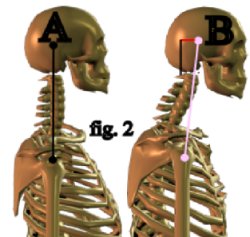
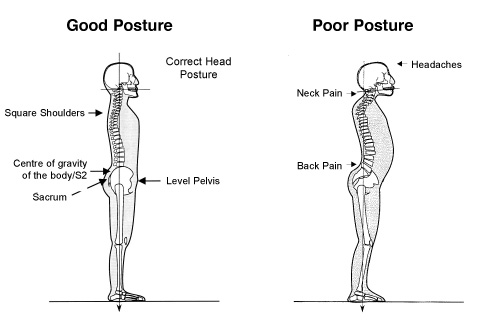
In such asanas such as halasana (plough), shoulder stand (sarvangasana), and bridge (setu bandhu), a chin lock may be inadvertently forced as the chin is mistakenly jutted into the sternum while the neck may be stretched too long or flattened. Such is is not desirable. Here it is not only valuable to keep in mind the action of jalandhara bandha keeping the chest open by lifting the sternal notch (top of the sternum) toward the chin (not the chin toward the sternum) while also the entire sternum lifts up at the same while allowing the front top of the shoulders and humerus to move up and around and to the back in a circular type motion at the same time. This motion of jalandhara bandha should be active (actively engaged) throughout such poses. In these poses (shoulderstand, plough, and bridge), the tendency then is to jut the chin too far forward and toward the sternum. That tendency must be avoided by allowing the back of the neck from C6 through the occiput to lengthen, focusing on maintaining the lift at the sternal notch upward toward the pelvis in this inverted situation so that the chin rests superior to the sternal notch not on the sternum itself. Again the key here is that the top end of the throat below the jaw at the hyoid bone, moves backward and upwards (posterior and superior) in forward flexion and posterior/superior motion of the hyoid. For this to work there should be freedom at the atlas occiput junction.
It is likewise useful while practicing backward bends such as cobra with jalandhara bandha, which work on expanding the chest, to bring the collarbone/upper sternum up toward the chin and with it the front of the upper humerus raises and moves back into the gleno-humeral socket, helping to extend the upper thoracic vertebra while activating jalandhara bandha here as well. In these poses we should emphasize that the chin does not raise upward lifting up away from the sternal notch by jamming the back of the neck, but lifts up only when C7 and the posterior scapula remain long off the ears and occiput. So in jalandhara bandha the heart never collapses or sinks -- the posterior scapula never raises, and the upper front humerus never moves in anterior and medially. here the hyoid and the occiput meet and hence jalandhara bandha is similar to mulabandha where the pubis and tailbone do not move apart as well. Again the key here is that the top end of the throat below the jaw at the hyoid bone, moves backward and upwards (posterior and superior). This is similar to the skull loop taught by John friend's anusara yoga.
Shoulder openers, arm grabs in back, chest openers, and the like also effect the action of jalandhara bandha. Similarly the correct action of jalandhara bandha is a synergist that makes such chest opening effortless, easy, joyous, and natural without compromising any other part of the body.
In other words entirely avoid the common mistake of trying to force the chin down onto an already restricted chest area or of straining the muscles of an already flattened neck, rather allow for the neck's natural "S" shaped curve for maximum function while allowing for the subtle release at the atlas/axis and the occiput.
Jalandhara connects the head with the heart basically allowing the energy to flow by opening up the connecting throat chakra. It thus helps lift stuck energy from the lower chakras through the throat and especially into the talu chakra (in the back brain) and also to the ajna (third eye) region. This region is bordered at the lower end by the thyroid and thymus glands and at the upper end by the hypothalamus, medulla oblongata, CV4, and the entire back brain. Connecting the heartmind it balances the autonomic and central nervous systems allowing body/mind harmony to flow freely in all directions. Thus the tensions between the body and the mind are ameliorated. Because of the chronic dysfunctional nature of the separation between head and heart a preexisting chronic tension is slowly remediated (it can not be successfully rushed or forced) through the efficacy of a practice that creates increased energy flow synchronizing the respiration and sinus heart rhythms, while neuro-muscularly lifting the heart forward as the upper chest moves upward. Like all bandhas it reestablishes inward flow through the subtle, but causal energy body.
As the root of the tongue (hyoid) raises away from the chin, the space above the crown should always be visualized as open, unobstructed, and clear as well. This ensures that the energy from the crown to the heart stays open. There is no strain to the neck but rather the distance between C7 and the occiput lengthens considerably. There should not be any tug/stretch of the fascia below C6. This is similar to saying that the top posterior scapula remains caudad. The energy remains free flowing.
Another point of observation is that the center of the armpits will raise up and move backwards in a spiral motion as the front of the upper shoulder girdle rises up and around, while the backside of the upper scapula remains caudal or depressed (down toward the tailbone). The upper humerus at the ball of the humerus rises in front and moves backward in the shoulder socket (posterior), rather than being hunched forward or medial. The lower ribs behind the kidneys do not sink or roll back but rather lift straight up toward the skull as the ribs fill. The space in the pectoral region releases tension and becomes alive. The full benefits of jalandhara bandha are realized in pranayama, pratyhara, dharana, and mudra practice where the these motions are completed.
In pranayama practice, jalandhara bandha is normally activated immediately preceding a full inhalation (antar kumbhaka where the breath is held in) and/or at the end of a full exhalation (called bahya kumbhaka where the breath is held outside the body). In the bahya kumbhaka, jalandhara bandha is less pronounced because the additional lift of the upper ribs provided by inhalation is not present. However kumbhaka pranayama (stopping the breath willfully) is not advised until all the preliminary pranayama practices have become mastered. If you have developed a degree of sensitivity to the energy body, you can manipulate the breath only if it feels natural, gentle, unforced, and spontaneous. Do not perform pranayama with retention (kumbhaka) if you are suffering from the residual effects of whiplash, otherwise it is an excellent exercise for the entire body/mind. As a preparation simply observe the bobbing motion of the head and neck while performing three part or yogic breathing especially observing the effect of the rising chest as the top ribs raise upward upon the filling of the upper chest with air. To get its energetic effects this bobbing motion can be done very subtly almost unperceivable to an observer, but yet containing the necessary energy.
As mentioned elsewhere some teachers teach the use of jalandhara bandha as the major operating mechanism in kumbhaka (retaining the flow of the breath (prana) so that the epiglottis is closed by jalandhara bandha preventing any air from escaping or entering the top of the trachea). Others state that it is performed by pressing the esophagus against the larynx thus closing off the wind passageways this way. Using jalandhara bandha in this way may cause unnecessary strain and is not recommended (unless your personal teacher has instructed you to do so and your practice is being monitored by a master). The simple act of swallowing will also close off the glottis preventing the breath to pass through the lungs. Try doing this (swallowing after an inhalation) while embracing the prana inside after a full inhalation. Then direct the diaphragm top press further down into the belly while keeping the chest raised in jalandhara bandha. Feel that effect and relax.
Some pressure may be felt in the lungs. If the diaphragm is simultaneously allowed to press down into the abdomen indeed oxygen may be more easily utilized, but again it is far safer not to create any pressure at all anywhere in the body without an experienced teacher or without a highly developed sensitivity to the the life energy (prana).
Rather it is safer and very effective to not use jalandhara bandha to close off the respiration at the glottis, but rather allow the breath to raise upper pharynx behind the nasal septum upward to create light pressure under the third eye region. Imagine light and prana moving into the third eye. The nasal passages themselves are often closed off utilizing khechari mudra or Vishnu mudra, but here again be cautious that the closing of the vayu (winds) not be held at the nose, but directed behind the nasal passages and superior toward the skull, where the khechari mudra normally is directed. If the tongue does not lift the underside of skull behind the third eye, let the breath give it rise. In advanced pranayama this direction of the energy (prana) are performed through non-physical mentation and energy techniques (through the breath, the nadis, and visualization).
One may also be aware that the energy of jalandhara (as in allowing the energy of the heart and body to connect with the head) may be called forth in almost any pose. A common remedial effect is that it prevents the jutting upward of the chin, the resultant pinching/compression at the back of the neck, the opening of the upper thoracic spine, and elimination of the mental/emotional tendency to raise the chin and nose up in arrogance, avoidance, pride, or fear. Coincidentally it prevents chronic sunken chin as it tones and balances the entire throat region. Thus jalandhara bandha can be utilized in most asanas while breathing continuously in order to relax the throat, lengthen the back of neck, and open and facilitate the energy flow lifting it through the throat chakra. Jalandhara, consciously implemented, balances the energy preventing sunken chests and jaws while preventing haughtiness and arrogance.
It is certain that the scalene muscle (running from the back of the cervical vertebrae to the front of the top two ribs) as well as the sterno-cleido-mastoid (SCM), and upper trapezius muscles, the pectoral muscles, teres, pectoral, and other muscle groups which are involved helping to open up the apex of the lungs and allow more prana to penetrate into the system and perhaps at the same time allowing the chest to raise further up. The pectorals muscles release while the teres muscles may become activated to aid in the entire inhalation process. Such comes into fruition through effective pranayama (see traya bandha below).
Like the other bandhas, jalandhara bandha is an energy valve (blocking the outward dissipating flow of energy while redirecting the life force back inward to regenerate and irrigate the internal nadis and circuits), which we at first get in touch with by experientially exploring through gross physical movements. This has physical, energetic, and mental/emotional positive effects upon the entire psycho-neurophysiology. After practice has matured, such is best allowed to occur naturally and spontaneously once we clear out the obstructions in the body/mind, opening up the nadis, forming new positive neuro-physiological tendencies, while reclaiming sensitivity, awareness, and intelligence in these dynamics, so that it becomes a spontaneous expression of the natural continuous eternal process of integration/union of shakti/shiva.
Jalandhara bandha is also associated with untying the Vishnu Granthi and thus opening up the Vishnu Loka or the Sambhogakaya by helping raise the energy from the lower chakras connecting into the heart as it works very well with mulabandha and uddiyana bandha in this respect. As such Jalandhara bandha helps draw the energy upward through the heart and throat. It also allows the bindu (neuro-endocrine substances at the brain) to melt down through the throat to the herat and rest of the body. However Jalandhara is associated specifically with opening the Rudra Loka at the third eye (ajna chakra) as it frees the energy blockages at the throat allowing it to enter talu chakra and ajna chakra and upward through the upper Brahmarandhra (hole at crown of the head) where Siva resides.
Picture shows the bregma fontanelle in front and the lambda fontanelle in back.
Performance: One may well visualize that center of rotation for jalandhara involves the lifting of the heart toward the head as the hyoid bone located at the top front of the throat moves upward (superior) and back (posterior). The head of the humerus helps lift the glenohumeral joint upward and backward along with the rising of the sternal notch upper ribs, collar bones, and armpit chest which all move upward and backward, while the posterior scapula rests downwards (caudad). The chin relaxes downward and inward, but that motion does not come from a rounding of the mid-cervical (hence the "S" curve of the neck is not reversed. The sternal notch is brought up toward the hyoid but the hyoid is moving to the crown. The chin simply relaxes inward and upward in relation to the throat. The scapula remains resting downward lengthening away from the ears and the occiput. The back of the lower neck is brought further backward and and prevented from moving upward while the root of the tongue (near the hyoid) raises upward away from the sternal notch.
As the upper front shoulder girdle is raised upward and then revolved backward (in a spiral motion) toward the back of the occiput, the heart moves forward (hri bandha) as the armpit chest spirals upward toward the occiput. Relax the throat and lengthen the neck so the chin can naturally go down and in. The distance between the occiput stays long in relation to the top back of the shoulders. Think heart lift rather than neck stretch.
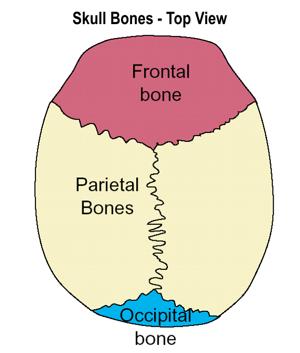
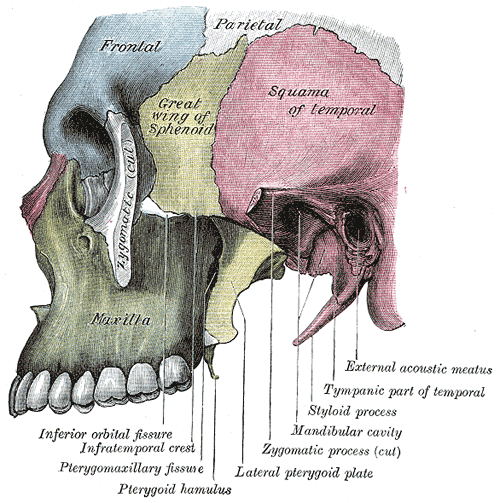
Hint: Create space at the back of the occiput throughout both the throat and neck. Allow for spirals, tilts, and eccentric motion as the neck realigns and releases. The chest should feel more open while the top back of the scapula moves inferior (caudad) and anterior in as the back of the occiput raises and moves back (posterior and superior). Simultaneously the heart is lifted as it is moved forward, the back of the lower ribs lift upward (kidney's lift) as the front of the floating ribs move posterior and tilt. See to it that the jaw, cheeks, tongue, throat, are not tense or clenched and all the other subtle joints of the cranium neck, throat and chest can relax through this motion. Many people have chronic TMJ problems which jalandhara bandha may correct over time, but who may may experience strange sensations in jalandhara bandha until the jaw unwinds.
One may visualize that the entire back of the skull is being lifted toward the stars from a string attached at the lambda point (the topmost point where the parietal bone and occiput meet) and then from there rotated forward. There are many very subtle motions in jalandhara bandha (especially difficult for those who have chronic neck tension). A subtle but salient point is in allowing the rotation and spiraling of the back of the skull without allowing the occiput (the cranial base) to move forward. Rather the occiput remains back (posterior) and up (superior). The hyoid bone as it rotates in forward flexion lifting inward and upward the upper front throat area which abides near the root of the tongue. (See diagram number ???)
In yogic diaphragmatic three part breathing the head bobs up slightly as the entire chest area as well as the top of the chest is filled with prana. If we allow this natural motion of the chest filling with prana to continue to move upward we activate the natural motion of jalandhara bandha spontaneously. In classic breath retention, the jalandhara bandha is implemented after the breath has been stilled (last) . In classic pranayama, mulabandha is implemented first. Most of the time uddiyana is performed in between. Thus jalandhara bandha is applied to cap off the retention of the breath classically. It is normally released before the breath is resumed. Classically on exhalation we release jalandhara first, implement uddiyana bandha, and release mulabandha last. Classically on inhalation uddiyana bandha is completely relaxed, mulabandha contains the prana at the lower centers (implemented next) and then at the top of the inhalation the jalandhara bandha is implemented. However as energy valves the bandhas can be implemented all the time. The synchronization of jalandhara bandha in relation to the other bandhas and the breath is described in detail below in the section on the three bandhas (traya- bandha).
The above bone/muscle presentation of jalandhara bandha describes the outside mechanical form. Internally during breath pauses (kumbhaka) it i soften recommended to close the glottis so no air can go in and out of the lungs. When the glottis is relaxed the throat (pharynx) opens to the lungs facilitating breathing, but when we swallow food and drink the glottis is closed thus closing the common passageway of the pharynx off from the lungs (larynx) and opens the pharynx to the esophagus and hence the stomach instead. This is the process of glutination. Hence we can become more aware of the full process of jalandhara bandha by observing the swallowing process, thus exercising and strengthening the glottis allowing the air to pause without any tightness or constriction. This can be best observed after a full three part diaphragmatic yogic breath inhalation, retention (kumbhaka), and then swallowing implementing jalandhara bandha and consequently pressing down the diaphragm into the belly. This has a corresponding nervous system action which tones the vagus nerve. Whether or not jalandhara bandha is preformed with a closed glottis or not, mentally and emotionally both the powerful breathing and eating dynamics and their equally powerful emotions are affected by jalandhara bandha. (See diagram number ???) That is the classic description, however one may desire to experiment not closing off the glottis or creating any pressure at all in that region but rather frill the entire windpipe to the area behind the nasal cavity pressing gently in back of the third eye with uplifting prana pressing upwards. On the exhalation one can feel the wind press gently against the third eye opening behind the nasal cavity utilizing ujjayi pranayama.
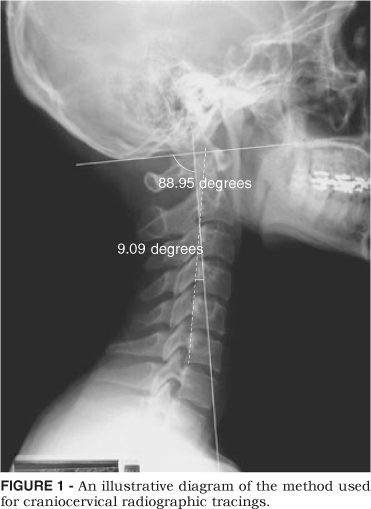
Cautions: Do not create stress in the neck, throat, jaw, face, eyes, palate, shoulders, or anywhere else. Let it find a groove. Especially avoid allowing the chin to drop forward and down or the top of the neck or skull comes forward. Rather keep the top of the neck below the occiput within its natural "S" shaped curve, backward (posterior), and long, allowing the back of the occiput (above the atlas) to swivel up as the chin moves down (rather than forward). Avoid collapsing the upper thoracic vertebrae as well. It is suggested to breathe fully when doing bridge, shoulder stand, halasana, knee to ear pose, and other asanas that force an extreme jalandhara bandha, but always avoid any constrictions/tightness of the throat as well as the breath. If you already have a flat neck (less than 10% of the population), then make an effort that the normal "S" shaped curve of the neck is achieved by making an effort to bring C1 and C2 posterior as the chin moves down and inward. The latter will correct a flat neck at the upper cervical spine.
Benefits: Jalandhara bandha tonifies the throat chakra, neck, shoulder, and arm regions. Jalandhara bandha is a great aid in pranayama which in turn is a great boost to pratyhara and meditation practice.
It can release and tone all the fascia running through the neck, chest and head including the scalene muscle (running from the back of the cervical vertebrae to the front of the top two ribs) as well as the sterno-cleido-mastoid (SCM), upper trapezius muscles, the pectoral muscles, teres, and others. It can correct TMJ and flat neck problems when performed with sensitivity and awareness. Jalandhara bandha helps pump the energy through the throat chakra into the crown and keeps the energy that has risen to the crown, third eye, and talu chakras from sinking down, leaking, or being dissipated, so it may continue to circulate in the chakra system. Like most bandhas it accomplishes pratyhara (here at throat chakra) bringing cleansing the corrupted energy in the throat area and arms and integrating it by bringing it back into the central channel. It remediates the tendency to jut up of the chin with resultant and cervical vertebral compression. It relieves pressure at the cervical spine and relaxes tension at the throat region. In yoga therapy it is specifically recommended in treating cases of high blood pressure. It aligns the cranial bones by adjusting the sphenoid bone (which rests on the cranial base inside the occiput. It frees the atlas/axis alignment and movement. It affects thyroid function and enhances the voice. It helps open the chest and heart and relaxes the shoulders. Thus it is beneficial to any adverse conditions that effect the upper torso, neck, and head. It counteracts tendencies toward arrogance, snottiness, uppitiness, aversion, and other such affectations of pride and ignorance. It lifts the heart and brings forth divine will, its expression, and hence moral courage is one effect.
The Asterion (In Greek, Ruler of the Stars). In medicine, the craniometric point behind the ear where the parietal, temporal, and occipital bones meet
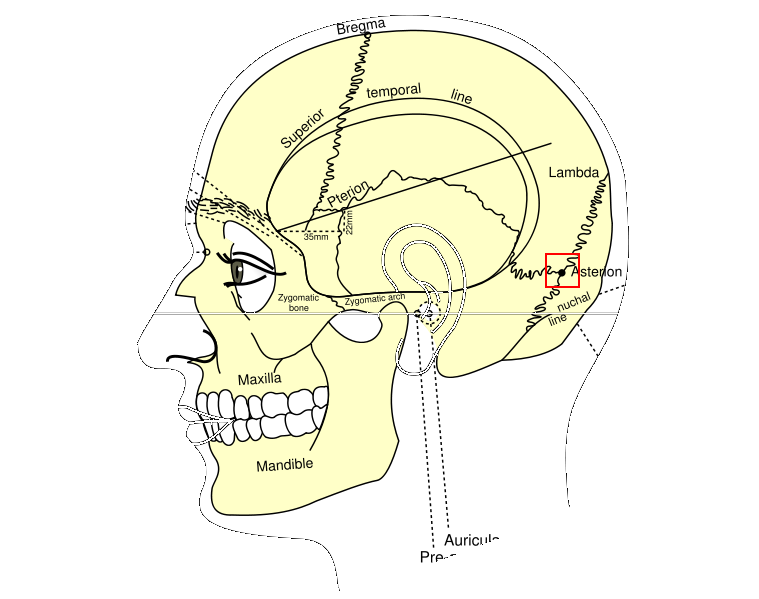
Spiritual and Mental Effects:
Jalandhara bandha is an essential aid in pranayama, pratyhara, and dharana practices. It keeps physical and pranic circulation open between expressive/manifestation center (throat and heart) as well as between the ajna chakra (third eye) and throat, hence it is the connection between heart and mind -- body and soul. It is synergistic in conjunction with mulabandha and uddiyana bandha as tri-bandha at anytime, especially in pranayama, and very helpful before and during meditation in order to draw the attention and concentration back into the central column and energy body, thus facilitating pranayama, pratyhara, and dharana simultaneously. As the connector between the head and heart, practice can be expedited by understanding the function of kurma nadi and the akasha (ether). See Patanjali's Yoga Sutras (chapter III) for more. Jalandhara bandha not only opens and activates the vishuddha chakra which is associated with the expression of Divine will and hence moral courage, while completing the conjunction of anahata chakra (heart) and ajna chakra (third eye) fully activating the ajna opening, but jalandhara also unties the knot at the Rudra Granthi thus providing the gateway into the formless Rudra Loka (realm of Siva/Maheshvara) or Dharmakaya (the primordial formless Buddha) hooking the energy through the last great granthi (knot) into the crown center (sahasrara).
The Sphenoid Bone: Wings of Hermes
Traya (Three fold) Bandha (sometimes called Maha Bandha)
General warnings about pranayama and bandha practice:
1) Never feel forced. Yoga should be gentle and healing
2) Stop the practice immediately if a headache, pain in the heart region, or dizziness occurs.
Pranayama is very powerful and causal. it links the autonomic nervous system with the conscious central nervous system and is capable of achieving far reaching body/mind results. Being powerful, it can not be approached mechanically, unfeelingly, and without sensitivity without bringing forth disaster, just as a match should not be played with by a child.
Classically tri-banda or bandhas three (traya-bandha) is the utilization of the three major bandhas of mulabandha, uddiyana bandha, and jalandhara bandha within an overall conjointly sequenced order. Classically mulabandha is usually activated first, then uddiyana, then lastly jalandhara, but as we will see all three can happen as a spontaneous and mutually synergistic wavelike motion.
The general directions have been to "hold" the bandha. The word, hold, can be misleading because it can lead to tension or imply force. It is better to think of implementation of a bandha as release of tension. If we release the bandha, we are releasing attention/focus. Most often we release jalandhara first and mulabandha last (the reverse order of application). This is a good rule to learn at first, with the foreknowledge that all these rules are artificial, they are to be broken as one advances and authentic wisdom through functional and effective practice supplants mere rules of thumb. Also the advanced student should realize that there exist many variations of the bandhas in conjunction with the various pranayama, mudra and visualization techniques. For example we have already previously stated that an energetic mulabandha can and should be implemented all the time (the tailbone and legs grounded), but in the beginning the bandhas are learned in their coarse external form and in a sequential order. Indeed it assumed that the beginner has already learned the hatha yoga kriyas, especially aswini mudra, vajroli mudra, sthula basti, agni sara, and nauli kriya before traya bandha is presented.
At the end of this chapter we have introduced additional adjunctive bandhas, so while utilizing these additional bandhas a rule of thumb is to apply the bandhas from the bottom up, and release them from the top down. Thus first mula, swadhi, nabhi, uddiyana, hri, jalandhara, and ajna bandhas -- in this case the order is usually best initiated from a firm base upward. If performed energetically the bandhas need not be a strain at all and can be held indefinitely, however such a presentation is not the classical written presentation (which is the gross and external). Especially jalandhara bandha is only given during kumbhaka (retention) and never held while the breath is moving i.e., it is released at the end of retention before the breath starts to move. In this section we will discuss
Here we will limit our discussion to the various implementations of tri-bandha which is a very valuable application for pranayama, pratyhara, dharana, mudra, and meditation practice. It cures both a wandering mind and a sleepy mind (both diseases of either rajas or tamas). Try doing all the bandhas all together in the following sequence, not only during meditation, asana, and pranayama practice, but even during the day while walking, sitting, and working.
Again the general rule of thumb is to activate mulabandha first. Most of the time activate uddiyana second or as a adjunct with mulabandha. Then jalandhara lastly. It is a practical rule to release jalandhara first and mulabandha last. As we reiterate often the subtle form of mulabandha can be done anytime/all the time (in other words we do not release mulabandha at all). It doesn't ever have to be released as it forms the base of the pelvis. In pranayama proper it contains the energy at the base so that it is directed into the central channel.
Likewise in classical pranayama jalandhara is usually not recommended while the breath is moving. It is only applied during retention (kumbhaka) as it designed there to move the energy between the head and the feet again utilizing breath retention. So we necessarily distinguish between using the bandhas conjointly with breath retention and utilizing the bandhas in asana, pranayama (without breath retention), dharana, and everyday life.
When not doing formal breath retention the preceding energetic approach to apply the bandhas as opening up these connection points 24/7 is recommended, as this will prevent any restriction of the breath, energy, movement, or consciousness at any of the energetic centers.
So here we to point out the existence of a more subtle and energetic jalandhara bandha (as well as the other bandhas), which also can be applied anywhere/all the time. For example, the subtle motion of jalandhara bandha can be applied in any asana so that one who may have the tendency to jut out their too far forward and upward (which causes an undesirable compression at the back of the neck) will benefit by bringing the chin inward and down toward the throat and at tech same time creating more space between the occiput and the top of the shoulders. This movement of jalandhara bandha can be used to alleviate neck tension when done with a soft throat, but if one already has a flat neck, a reversed curvature at the neck, or other abnormalities of the s like curve at the cervical region, then more customized directions are suitable, thus the above can only be stated as a general rule of thumb. For example many people tend to compress the back of their neck in backward bends, but not all while some people may overly flatten the back of their necks in sarvangasana (shoulder stand) and halasana (plough pose), but their are many exceptions. In this regard a a "good" teacher may be a reasonable substitute until the lacking "self knowledge" is attained. This is true for all kriya, asana, bandha, pranayama, and mudra practice.
Tribandha taken conjointly is very valuable for mudra, pranayama, pratyhara, dharana, and meditation practice. As mentioned above, tribandha not only cures both a wandering mind and a sleepy mind (both diseases of rajas or tamas) and thus is excellent as a counteractive remedy in meditation practice, but it goes further in balancing the doshas and winds, balancing prana and apana -- the ha and the tha of hatha yoga. It increases rajas energy if it is lacking and moves it through the system if it has accumulated to excess in any one spot and been blocked. Bandhas help to move the energy through all the energy centers and as mentioned above can be said to pierce the three psycho/physical knots (granthis) which block the three realms of existence. Tri-bandha or trayabandha specifically draws the energy into the the muladhara chakra and from there into the sushumna (central column) and it is thus the forerunner of the advanced pranamaya practice of vase breathing and the mudra practice of tummo heat. As such the practice of the bandhas are often called a fire practice. Indeed it is closely related to tapas (turning up the heat) in many respects.
As indicated throughout this book. Traya (traya means the three) bandha in its subtle energetic form can be implemented throughout asana practice and throughout the day and night. They also occur spontaneously when one is naturally aligned with Source or as Grace. Traditionally the three bandhas (Traya bandha) as used in pranayama practice is as follows. Very Simple traditional tribandha (trayabandha)
Sequence of traya bandha with antar kumbhaka (internal retention) utilizing mulabandha throughout:
Pranayama with retention (kumbhaka) is not recommended without expert guidance. Especially forced external kumbhaka (bahya kumbhaka) can have quite serious consequences as it can cause negative pressure in the lungs and stress to other components. It is is cooling activity.
Another way to perform tri-bandha is to relax the jalandhara bandha at all times. That relaxation is cleverly its initiation. Just make sure that the glottis is open and the throat and neck muscles are not tight, tense, nor stressed. In other words both jalandhara and mulabandha are implemented throughout and the practice becomes more of a pranayama practice. Some schools teach jalandhara bandha to include the forced closing of the glottis, but in this specific version there is no tension or holding at the throat or glottis, but merely the chin comes in toward the sternal notch while the back of the neck elongates.
The following is a simple version that I like to give in a mixed class: Here mulabandha is implemented throughout, but jalandhara is manipulated, while uddiyana bandha changes from a subtle implementation (on the inhalation) to a more physical coarse implementation on the exhalation:
Hints:
Since uddiyana bandha is always best implemented in conjunction with mulabandha, the above did not recommend releasing mulabandha before the exhalation (after releasing jalandhara bandha), but please note that many schools advocate releasing the mulabandha during exhalation (right after jalandhara bandha is released). It is advantageous to keep the spine long throughout as if the crown were raising toward the heavens while the pelvic diaphragm simultaneously merges/connects with the center of the earth. The active motion is at the navel connecting to the spine, not at the diaphragm which should be relaxed as it is allowed to move upward. On the inspiration eventually visualize the muladhara chakra sucking in the cosmic prana through the implementation of mulabandha while on the expiration the apana returns upward to Source through the a very fine channel approximating the spinal spinal column. If you like establish conscious rapport with the self supporting pillar (lingam) that exists between heaven and earth.
Advanced Practice:
In general, if you have not learned the subtle practice of mulabandha (see above in the mulabandha section), then it is best to make sure that you release mulabandha before the exhalation. Make sure that after the practice any tension in the pelvic and urogential diaphragm regions are released. However if you have learned the energetic aspect of mulabandha without contraction, then it is better to implement mulabandha in that way throughout the pranayama practice never releasing it. The practice itself puts us "in touch" with the energy and it is this pure awareness that continues to instruct. Without this awareness we resort to general rules of thumb (which are merely temporarily compensatory in nature. In more advanced practice occurs when the energy no longer leaks outside (bound inside activating the subtle energy body) -- all three bandhas as energy valves directing the energy into the evolutionary body is simultaneously occurring continuously -- all the time.
The ordinary use of the three bandhas are highly advantageous specifically in pranayama practice and especially, especially so in kumbhaka. So as we become more at ease in pranayama practice and more aware of the energetics we not only apply the mulabandha all the time, but actually we can apply the subtle energetic uddiyana bandha after the jalandhara bandha at the end of the INHALE. as well. This creates space in the torso and lengthens the spine facilitating traction and extension (ayama). Although this is learned sequentially at first, later the bandhas are practiced so that they are not applied mechanically, but rather gradually and softly and all together in a wave like or spiral motion in coordination with the lungs, ribs, spine, torso, head, and pelvis.
There exist external "rules" for beginners, but eventually they ALL have to be thrown away as we learn from the prana itself -- as we form a living response-able partnership with the life energy. . Indeed progress means change and there are many planes and transitions/transformations to ALLOW for. How can this occur if we are tightly holding onto the past a authoritative, lawful, or "right"? Indeed how can we allow our sacred cows (false limiting beliefs) to fall away?
Jai Durga!
Utilizing the Three Basic Bandhas with the Breath, Pranayama and Advanced Mudra Practice
The process is like a wave on the ocean -- it is neither sharp angled nor flat -- it is not even three dimensional -- It happens fully when we drop the individual mind and will altogether and allow for it (through authentic isvara pranidhana). Thus the motions do not happen sequentially, but rather in mutual synchronicity. They are mutually synergistic. As practice increases the activity becomes ever more refined and subtle.
To avoid energetic and physical problems the bandhas are taught first. Then asana, then pranayama proper, then mudra (with asana, bandha, visualization, and breath). Utilizing traya bandha thus in pranayama assumes that we have done at least the preparations.
1) Thus in pranayama at first we teach beginning yoga students diaphragmatic breath (to be aware of moving the diaphragm while breathing). This is shown by the belly rising on the inhale and sinking on the exhale. Later once this awareness and ability is integrated we teach them three part breath (yogic breathing). First the belly inflates, rises, and widens; then the ribs, and then the apex of the lungs while upon exhalation the reverse occurs. One should notice how the ribs attach to the sternum in front and the spine to the back and how the breath thus lengthens the spine and moves the heart. This is as far as the majority of the yoga students go, but it is only a preliminary only.
2) Then alternate nostril breathing (nadis shuddhi), agni sara, kapalabhati, ujjayi, sitkari, sitali, and their variations are usually taught with their variations are taught. These are all very safe (as they are done without retention). Again we are assuming that the basic bandhas (mula, uddiyana, and jalandhara) are already familiar. In this regard the hatha yoga shat karmas (kriyas) are most synergistic. Likewise the bandhas are essential for the kriyas.
For example, traditional jal basti, vamana dhauti, nauli kriya, and agni sara kriya can not be done without first mastering uddiyana bandha. Thus these kriyas (along with the rest of the shat karmas) are taught at the very beginning of any traditional hatha yoga training. Unfortunately, it is not well known in the West that all the bandhas may be used very effectively during asana practice as well as well as pranayama and as a preparation for meditation.
The average students in the West are not interested beyond these preliminary stages. Only when there is sincere spiritual interest or passion (tapas) the more advanced pranayamas are taught which involve kumbhaka (retention) as the next step.
Always as we start to address"developmental"stages, there will arise contradictions as to the "rules" set out for the beginner. In other words the beginner is taught to perform nadis shuddhi (alternate nostril breathing) incorporating the three part breath noticing the duration and qualities of the breath. This is very instructive and beneficial -- not a phase to be skipped. Later nadi shuddhi is developed further to sukha purvaka where one applies mulabandha at the end of the inhale then jalandhara bandha (inter-connecting two bandhas simultaneously). Then to exhale, release jalandhara bandha first, then implement uddiyana bandha, and lastly at the end of the exhalation the beginner is often taught to release mulabandha. Although some schools teach to embrace mulabandha throughout, it is generally thought to beneficial for the beginner to alternately let go and implement mulabandha with awareness frequently, especially at first.
This same sequence can be used for internal (antar) retention (kumbhaka) after bhastrika or kapalabhati as well or any antar kumbhaka for that matter, but it is only preliminary and should not be held onto as if these bandhas were actually "performed" sequentially, linearly, or rigidly but rather more so smoothly, with kinesthetic feedback, energetically, wavelike, and naturally.
Likewise for external (bahya) retention (kumbhaka), say at the end of bhastrika, we implement mulabandha, exhale all the air out with a strong uddiyana bandha. While maintaining mula bandha and uddiyana bandha we cap it off with jalandhara bandha, but instead of these being performed one at a time (sequentially) they can be done all in a gradual wavelike spiral movement and energetically. Then to inhale, we release jalandhara bandha first, then uddiyana, then mulabandha and engage in another round of bhastrika.
Of course it is best to have an experienced teacher observe and suggest, but they are rare, while the inner teacher of innate awareness is always available according to our passion and ability to apply sensitivity and awareness to our practice. But because pranayama is indeed a very powerful force, it is recommended that an experienced teacher be consulted (at least for pranayama practices that call for kumbhaka). Remember that the point is not to hold the breath as long as you can (in goal orientation, control, or will power -- as that can be injurious), but rather attain that state where breathing is no longer called for (Kaivalya).
The above "guidelines" exist for the intermediate beginner and further practice REQUIRES that we eventually give up these guidelines as well. This is called authentic PROGRESS or spiritual evolution. So there exist then further advanced practices which will contradict the above as we become more finer attuned to the ever present teaching/teacher -- as we learn to listen in pure awareness and consciousness. It is my hope that the above will be sufficient to begin the journey of inner exploration, as it is not desired to add confusion nor rush the practice. It is very powerful at first to become aware of the breath and activate certain energy circuits. One learns to activate the breath and energy. When the nadis are open and the requisite awareness of the energy body is achieved , then most likely the inner wisdom and evolutionary consciousness so activated will lead the sincere seeker further by itself -- we become breathed by that Source and know it directly.
As mentioned, these practices involve utilizing the energy of uddiyana bandha even on the in- breath so that instead of having the belly inflate, the back and pelvis fills while the torso and spine remain elongated. . This is also called back breathing and is the beginning of vase breathing (of the Maha Siddhas) which is a requisite preliminary to Tummo (Kundalini practice) and Phowa, which is itself a preliminary to the more advanced inner/outer tantric practices of aligning and synchronizing the inner constellations with the outer.
Thus it is best to start off with the clear understanding that all the bandhas are ENERGY locks on the subtle level, not necessarily muscle contractions (although their energetic movement may as a result shorten the spaces between two bones). For instance in mula bandha the perineal space must soften to be allowed to draw up (if it is drawn too far down), and thus with the softening of the area the space between the pubic bone and tail bone shortens. If we suffer from a lack of apana, then the perineum may already be drawn up too much in spasm and must be allowed to relax. The point being (see aswini mudra and mulabandha discussion), the bandhas are not done through normal muscle contraction as in the outer/gross form of aswini mudra or vajroli mudra.
With all bandhas we establish flow and remove stasis and thus there is an absence of effort and force -- it MUST become more than effortless -- it must energize, balance apana/prana, and give us energy! This is being reiterated because it is the most common misconception. Thus the bandhas create flow through and between the chakras, rather than restrict it. They loosen the knots, not worsen them. Thus they redirect dormant energize while liberating our higher embodied potential and evolutionary circuitries. What they do restrict is the outward dissipation of energy at the very chakras thus stopping the outflow and in this sense they are the energetic and physical correspondent to pratyhara and vairaga in these regions their ultimate purpose is to stop outward flow and dissipation while activating the evolutionary energy in the central nadis (sushumna) called kundalini (i.e., the purpose of hatha yoga).
All the above can be invited to happen naturally -- all the bandhas and breath can be implemented a little at a time simultaneously -- all a little at once -- synergistically, without rigidity, as the spine moves in a wavelike spiraling manner, rather than one at a time sequentially. When the inner teacher takes over -- all this happens not through the agency of the will or the intellect, but rather by shakti's grace - spontaneously.
More elaborate or sophisticated techniques are not always better. The main thing is that the divine passion/longing is still beckoning us strongly, and we are moving in that direction through our yoga practices. Extensive techniques may be obtained in books or by external teachers, but the inner wisdom energy must lead. Authentic practice is based upon getting the inner guide activated and very much involved -- know him/her as no other than the Self. All instruction is available in turiya. We can share some specifics, but such should not be limited to linear, flat plane, willful, external, or left brain dominated practice.
The best practice is one that is suited for our own unique constitution (which necessarily varies for each individual). What thus works best is to emphasize listening, observing, meditation, receptivity, receiving information (often in the form of positive biofeedback loops) and then acting accordingly and while augmenting innate "response-ability" until a direct positive feedback loop is created -- self activated -- spontaneous while still observing, but here the individual will and intellect is no longer the doer. In sahaj or natural yoga we are moved and breathed by "THAT" --- that COMMUNION with nature in everyday life (as well as in sleep) is what my practice attempts to deepen, make more continuous, and whole. Thus it is very simple -- requires no books, computer, or props other than a good blanket/mat or kusha grass, passion, and mother. Jai Ma!
Part Two: Less Common Adjunctive Bandhas
Following are some additional inner energetic bandhas that are often recommended for various specific effects. They are advanced, but at the same time, not necessarily better (as more is not always better). For example, mulabandha is generally considered to be the most valuable bandha. If it is implemented "correctly" all the other bandhas will come into place and for the most part, they may even occur spontaneously. Likewise, for example, if mulabandha is perfect, then swadhi bandha will not be called for in the first place.
Some of the following are modern non-traditional bandhas that have been formulated through intensive hatha yoga practices, which may not be suitable for every body. In addition, one may find more bandhas listed by modern yogins such as hasta bandha and pada bandha that is described in Orit Sen-Gupta's and Dona Holleman's book,. "Dancing the Body of Light: The Future of Yoga", Pegasus, 1999 and also by Tias Little in his excellent article in the November 2001 issue of "The Yoga Journal".
For example, in pada bandha the natural arch in the foot allows for a unique maximum flow of energy through the legs and foot which is a pivotal center especially in standing poses, but pada bandha can be activated in most all poses (sirsasana, sarvangasana, etc.). To get a feel of pada bandha try single leg balancing poses such as ardha chandrasana, Nataraja, or especially warrior III where the foot "cups" the earth. All the toes remain long and wide but a trans-integrity is formed in that the tarsal bones (toes) press toward the heels as the heels stay engaged with the toes, Thus the arch and entire foot is strengthened, balanced, and energized. When we are able to strengthen the arch of the foot via pada bandha, we then are able to utilize the lift at the arch to augment the lift of mulabandha. Do not create tension or stress. Like all the bandhas this is conscious relaxation and opening of a vital connection point. One will experience this synergy with practice.
Likewise in hasta bandha this particular cupping configuration is applied to the hands when they touch the earth. This trans-integrity within the nadis allows synergistic efficacy especially for handstands, scorpion, plank, and the like. All arm balances with the palms facing down can greatly benefit from the lift of hasta bandha. Note that the base of the palm and the pads of the palm both remain on the earth, but the center of the palm gently cups up the energy while releasing accumulated tension.
For example in handstand we are balancing on the hands, but how often does a beginner actively accept the balance at the hands. Most people use their hands as stable but dead blocks, but one must keep the hands alive and active providing not only support and balance, but also the lift.
This is similar to utilizing pada bandha in warrior III realizing the essentiality of the foot bandha (pada bandha) in supporting, balancing, and lifting the entire body. There the foot grabs/cups the earth and the arch is strengthened and in hasta bandha the same is done but with the hands instead. The same dynamics that happen in pada bandha in Warrior III must also happen in handstand with hasta bandha, except that it happens in the hands rather than the feet. Of course the feet should also be active in handstand, but here the essential action and balance point is found through the activity of the hands.
"... in hasta bandha the weight of the body has to be shifted from the wrists ... to the central bones of the palms .... Then the center of the palms are sucked upward in the same way as in pada bandha, thus trapping the energy in the typical arch construction, and sending it upward through the arm and shoulder joints. The fingers are kept long, and flat on the earth and they root together with the wrists, forming the rim of the cyclone or bandha. This corresponds to in the action of pada bandha, where the toes are elongated on the earth and root together with the heel bones."
Pg 44. "Dancing the Body of Light", Dona Holleman and Orit Sen-Gupta, Pegasus, 1999.
Likewise one can find similar energy valves throughout the body. Here we will discuss only a few that may be specially useful for meditation and/or asana practices. Let it be noted that the bandhas as energy locks are meant to be utilized with pranayama, asana, pratyhara, and visualization (dharana) in advanced hatha yoga practices called mudras. Such mudras, bandhas, pratyhara, and pranayama, and asana can also occur spontaneously as the activity of shakti (kriya shakti).
Jivha Bandha and the Talu Chakra
This is the placement of the tongue on to the front top of the hard palate at the juncture with the teeth (the tip of the tongue actually touches the front teeth. In some schools, just the tip touches, in other schools the front hollow of the tongue also touches the hard palate, while in other schools the tongue is curved slightly backward toward the soft palate. This is a common bandha used to seal any dissipation/distraction of energy from the ajna chakra region and above. Like jalandhara bandha it connects the throat chakra with the head, but more specifically the talu chakra near the root of the tongue near the back brain and the ajna chakra (3rd eye) region.
Relax the neck, throat, cheeks, jaw, back-brain area, bottom of the brain and the forehead (and all inbetween). This serves the pathway function of the kurma nadi.
Cautions: Do not use hard physical pressure, rather RELAX the physical tongue and especially the root. Instead of a physical touch at the upper palate, attempt to energetically "Sense" and "touch" the top of the palate while establishing this connection..
Discussion: Jivha bandha practice, although similar, should not be confused with khechari mudra where the elongated physical tongue is brought back behind the soft palate, behind the uvula, and up behind the backside of the nares (effecting alternate swara closure by the tongue) and then ultimately up to the space behind the the eyebrows. This physical or coarse form indeed bestows the energetic positive after effects of Jivha Bandha, it is the great seal or king of the mudras extolled by the yogis. The Jivha bandha as an energy lock as in the inner (antar) practice of khechari, preventing the wavering of the dualistic mind, just as the gross form where the physical tongue blocks the passage of the ida and pingala psychic nerves (nadis) and shunts them into sushumna (the central nadi) joining the sahasrara (crown) with the sushumna, and hence uniting it as one with the physical body effecting energetic and psychic integration with the eternal divine. Here one rests in divine peace.
The symbolism of khechari mudra is discussed in the mudra section of this book, but here we will simply discuss jivha bandha as a simple and easily attained position of the tongue that completes the energy valve from the throat chakra, talu chakra and upward to the third eye (ajna chakra). This method should remain soft but conscious. It is used in meditation as well as pranayama in order to help accomplish this subtle energy connection, while khechari mudra may be considered the big brother of jivha bandha. Khechari mudra for those so gifted is used in pranayama and meditation extensively.
Ajna Bandha: the Third eye or Ajna Chakra
Ajna Bandha: Not discussed in the classical hatha yoga literature except as a mudra. It is the most subtle of all the bandhas moving the distilled energy of all the other chakras in a fine line into crown (sahasrara). When it is done spontaneously, it is characterized by the eyes moving up and back into the third eye, the eyelids lightly quivering, the eyebrows slightly raising, the tongue spontaneously in khechari mudra, the nostrils lightly flaring, the ears slightly elongating and raising, the condyles at the back of the neck unwinding, the jaw naturally dropping long. In addition a spontaneous puckered smile forms on the tightly closed lips and internally there is perceived a translucent effulgent energy interface at the third eye sometimes producing a slight external quivering at the forehead region.
In meditation and mudra practice ajna is usually activated lastly after all the other bandhas are implemented, raising the energy up out of the lower and middle sushumna, removing any blockages to the crown., and in this way it completes the siva/shakti circle. It will help in pranayama as to complete the final journey of the prana after the retention (kumbhaka), both after the inhalation (puraka) and exhalation (rechaka). It should never be forced, but rather practiced as a cooperation and allowance for these energy vectors to occur.
Ajna bandha energetically interlocks, inter-connects, and intelligently opens creative dialogue between the throat chakra, talu chakra, third eye, and sahasrara permitting the energy to synchronize and flow inward and upward re-forming the sacred link between creation and creator in effulgent and trans-conceptional embodied Love. With all the chakras energetically linked and interconnected through the bandhas the crown and root are re-united, heaven and earth, the groom and bride, the right and left, spirit and nature, Kether and Malkuth. Here we rest in the healing eternal waters that bathe and nurture all.
Swadhi Bandha: Swadhistana Chakra
Swadhi bandha is also not discussed in classical hatha yoga
treatises. It also utilizes elements of the pelvis like mulabandha, but differs
from mulabandha in that the trans-integrity operates in a horizontal plane,
while mulabandha operates more in front/back and top/down planes. Swadhi bandha, when combined with mulabandha and uddiyana bandha,
opens the energy in the swadhistana chakra and pelvic bowl by balancing and integrating the
energy in the middle and upper pelvis, thus it connects the fire chakra with
the earth chakra by opening up any knots between the earth chakra, water chakra (swadhistana), and fire chakra. It
maintains the opening of the sacral area in the back, the area below the navel in front, the
sides of the torso between the iliac crest and lower ribs, the space between
the sit bones, and the spaces between the two posterior superior iliac spines
(PSIS) while adjusting the sacro-lumbar junction (L5/S1)
Some pelvic anatomy may be useful. The pelvis coxal bones (os coxae or innominate bones) is often misnamed the hip bone. Rather. the hip is a joint formed by the articulation of two bones, the femur and ilium at the acetabulum. The pelvic bone (os coxae or innominate bone) actually consists of three bones, i.e., the pubis bone, the two ilia, and the ischium. These bones do not usually become fused together except in adults. The sacrum and tailbone, although found within the pelvic girdle, are not considered as parts of the pelvic bones, and are capable of individual movement. The os coxae, taken as a whole, articulates with the sacrum at the sacroiliac (SI) joint in back, and the two pubic rami in front.
The bony pelvic cavity broken down as 1. Sacrum 2. Ilium 3. Ischium 4. Pubic bone 5. Pubic symphysis 6. Acetabulum 7. Obturator foramen 8. Coccyx The red line denotes the pelvic brim.
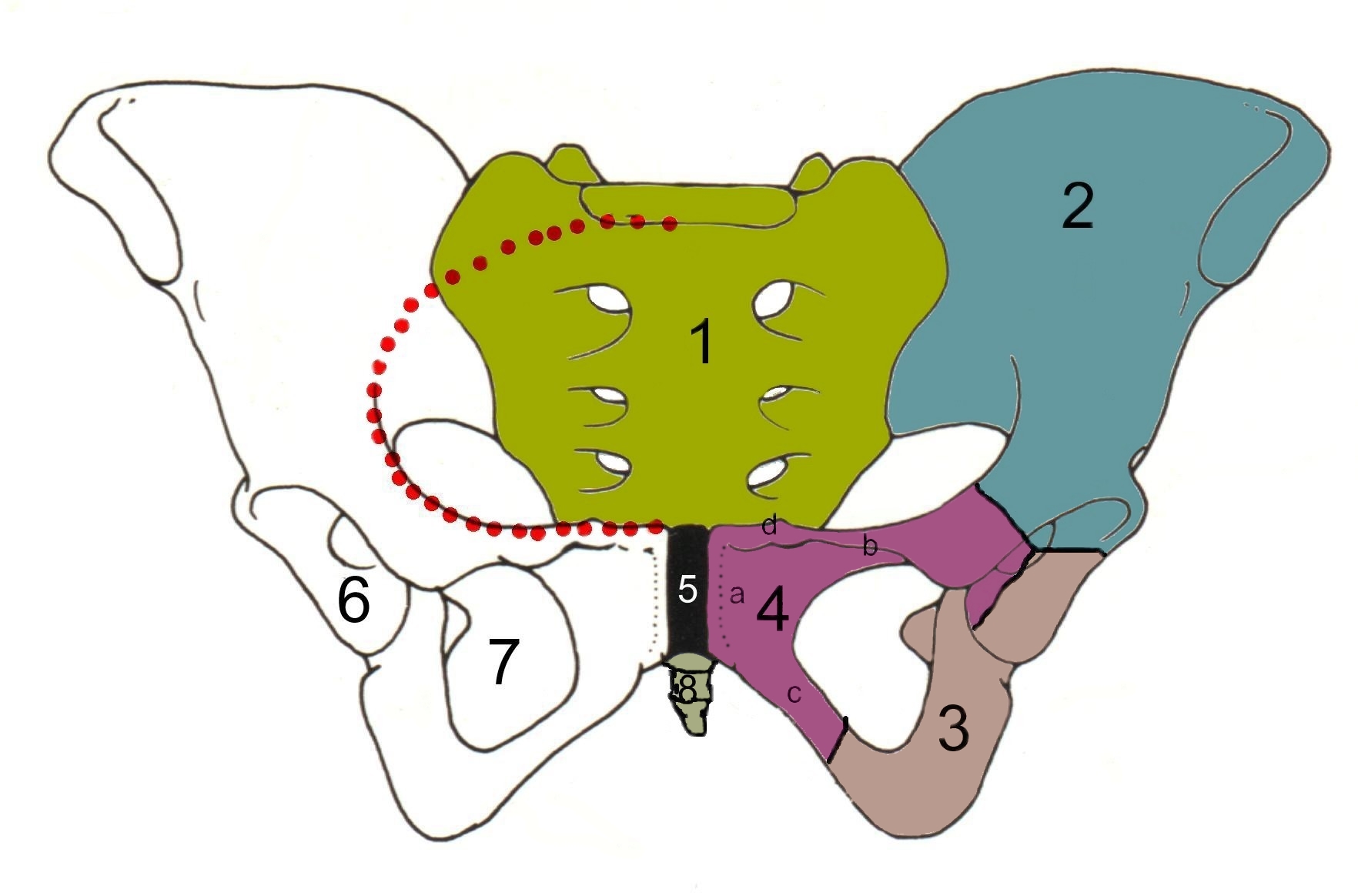
The primary move of swadhi bandha can be described as the circular swiveling of the two PSIS (posterior Superior Iliac Spines) outward and off from the sacrum, the widening of the two ischial tuberosities (sit bones) away from each other, and the movement of the two ASIS (anterior superior iliac crests) in toward each other, while the two iliac crests swing around to move toward each other anteriorly The two iliac crests do not move directly toward each other, but rather first open out laterally and then curving inward in toward the front. This action is hinged at the mulabandha as the two sit bones simultaneously widen away from each other as the medial iliac spines spread away from the sacrum liberating the sacro-coccygeal complex as the back of the sacrum is given more space to move between the two ilia If one likes, one can simply focus on one movement such as the two PSIS (posterior superior iliac spines) moving laterally (away from each other) creating space for the sacrum to slide inferior (downward).
This movement is often described by some schools of yoga as the two ASIS (anterior superior iliac spines) connecting toward each other synergistically; however this image may be counterproductive and increase tension. It should be visualized more as relaxing in a spiral motion aligning and balancing the ischium, pubis, sacrum, and ilia, so that three bones and fascia of the pelvis are mobilized creating space at SI (sacroiliac) joint. The two two innominate bones of the pelvis move laterally away from the sacrum, while the the sacrum can freely slide down and away from the lumbar spine providing more support in lengthening the entire spine without rounding the lower back.
For those whose SI joints are compressed, this motion will appear as an synergistic connection between the two iliac crests in front, as the sit bones (ischial tuberosities) widen apart. Various hatha yoga asana will provide awareness in these areas. For an illustration on how the sacrum moves within the pelvic bowl in this manner see diagram #???. For a diagram on how the two ilea (or rather innominate or coxal bones) move independently in this manner, see diagram # ???)
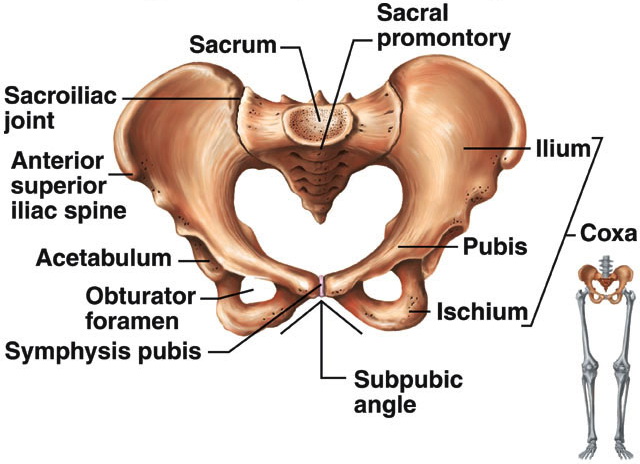 .
.
For a graphic representation visualize a top down (superior view of the pelvic bowl. Visualize the half moon shapes of both innominate bones (os coxae) rotating as in an inward arc toward the center line starting from the sides (the left bowl clockwise and the right bowl counterclockwise). This motion occurs equally in the pelvic inlet as well as the pelvic outlet i.e., both at the top of the sacrum and at the sit bones equally. One could thus say that this is an abduction or decompression of the SI joint. Thus one may visualize that the two coxal bones or ilia (os coxae or innominate) spread out from the SI joint or abduct in a swirling. The thighs may appear to rotate inwardly (the front of the knees rotate in toward each other), while the energy is spiraling in to the swadhistana chakra (hara center) below the navel and in front of the sacrum. Along these anatomically functional lines, it should be noted that the five hip adductors (adductor brevis, adductor longus, adductor magnus, pectineus, and gracilis) also serve as hip medial rotators as well as hip flexors.
Some asanas can help create this motion through directed actions of the femur in the hip socket (acetabulum) while directing these torques through the innominate bones (os coxae). For example, while standing the motion of internal rotation of the hip/femur joint may also help this abduction at the SI joint, hence swadhi bandha is accentuated. Likewise the external rotation of the hips may compress the SI joint and reverse the swadhi bandha. Hence when engaged in positions of external hip rotation it may be wise to maintain swadhi bandha in order not to compress the SI joint unduly. Similarly adduction of the hips that is effected by such asanas such as gomukhasana, matsyendrasana, marichiasana, and garudasana (most adduction in general) as well as internal rotation of the hip joint will tend to help effect decompression of the SI joint and swadhi bandha widening the two innominate (coxal) bones at the SI (sacroiliac) joint in back away from the sacrum and thus allowing the sacrum and coccyx to slide downward (effecting what is sometimes called counternutation of the sacrum).
Although adduction, abduction, internal, and external rotation of the hip joint can assist in swadhi bandha (and/or swadhi bandha can assist in these movements), we are not addressing the actual anatomical movement that occurs at the top of the femur inside the acetabulum (ball and socket joint of the hip joint) as swadhi bandha per se. Rather, by swadhi bandha we are referring to the movement between the two innominate (coxal) bones in the pelvis proper that is created by the femur as it leverages the two wings of the pelvis outward -- as it widens the fascia (width wise) across the back of the sacrum, pelvis, and thigh. In other words such motions as adduction and internal rotation may help secondarily in aiding this motion at the SI joint, while poses which normally abduct the hip and create exterior rotation may be stabilized and prevented from compressing the SI joint through the implementation of swadhi bandha (widening outward and forward of the iliac crests).
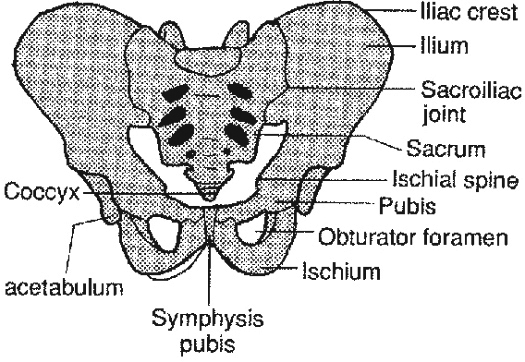
Here as the iliac crests may ROTATE toward each other in a anterior (forward) direction, while the sit bones move away from each while the back of the PSIS actually move outward (lateral). This is a spiral motion, while no compression or tension in the pelvis is created; rather the opposite, an opening is felt; yet stability is reinforced simultaneously. Both the pelvic inlet (the top of the pelvic bowl) and the pelvic outlet (the bottom of the pelvic bowl) actually expand and open simultaneously in wavelike pulsatory motions.
Perhaps it is more valuable way to describe Swadhi bandha is as the movement that allows expansion of the two sit bones and the two PSIS (Posterior Superior Iliac Spine) points away from the midline allowing the sacrum to sink down off the lumbar spine. The front of the two iliac crests may appear to be rotating forward and inwards toward each other, thus creating space at the back of the pelvis for the sacrum to drop and thus lengthen from the lumbar spine. In this process do not create tension in the front of the pelvis.
This lateral opening at the back of the pelvis will take any pressure off the sacrum (at the SI joint). Here we are looking not only for horizontal balance and synergy at the front top of the pelvis (ASIS) but also at the iliac crests, sit bones, and pubic bones. When this is explored and learned there is no imbalance at the sacrum top or bottom, between the pubic bones, sit bones, or iliac crest. The entire front, back, and top of the pelvis is in synergistic symmetry, equilibrium and alignment. This creates stability in the pelvis and SI joint necessary for all twists and asymmetrical asana practice.
In other words, when the two ASIS protuberances and iliac crests rotate in toward each other in front, the two sit bones (ischial tuberosities move away from each other, and the two PSIS points also move away from each other in back. Thus, an intra-pelvic movement between the two pelvic bones occur, which hinge upon the pubic symphysis in front yet this joint does not proximate, but rather remains distracted or in traction. Thus, in swadhi bandha we can hinge the two iliac crest bones forward and inward (in a circular motion) through a widening and opening action at the SI joint where the sit bones move laterally away from each other and simultaneously the pubic symphysis provides the front hinge without compaction. Thus, not only does the SI joint open, but the trans-integrity of the two pubic bones (rami), the two sit bones (the bottom of the ischium at the ischial tuberosity), the two PSIS bones (at the back of the pelvis), the sacrum, tailbone, and iliac crests all move in a characteristic balance, alignment which eliminates stress and creates synergy and flow in the pelvic girdle. The hinge that occurs at the pubic symphysis brings the energy into the lower belly (ovary/prostate/hara region) or swadhistana chakra preventing dissipation. This is swadhi bandha.
Here we go for the balance and energy flow using any or all of these anatomic parts (ASIS, iliac crests, pubic bone, sit bones, PSIS) as landmarks so that the entire pelvic bowl (consisting of the pelvic inlet and outlet) and all their connective tissue, fascia, glands, organs, and nerves are able to release any stress or tension from its wavelike spiral motion. As discussed in the earlier chapters even the action of the humerus can exert many vectors upon the pelvis (for example through the action of the latissimus dorsi which attaches from the arm to the pelvis), so here we can learn to utilize all these inter-relationships with the sacrum synergistically especially in standing poses but as well as in arm movements. At the same time this awareness allows us to intuitively evaluate the correct placement of the legs and arms -- our overall stance in life in relationship to its effects on mula and swadhi bandha.
Hint: Continue to move so that the coccyx continues to move forward while the sacrum is able to slide downward (counternutation of the sacrum) creating an awareness of the spine lengthening by opening the two iliac crests away from the midline, while simultaneously separating the two sit bones and PSIS in back. Pay attention to the top and bottom of sacrum so that balance is achieved at the sacrum without tilting/distorting it in relationship to the spine. This movement should allow the tailbone to elongate, drop, and move freely. Do this all consciously (with sensitivity and awareness) and by all means do not create tension or undue contraction. Perform mulabandha first.
Benefits: Like mulabandha, many of us may be tight, insensitive, tense, blocked, or immobile in this region at first; and it will be through intense practice and awareness that these directions will gel, creating a subjective/objective living integration. Like all the rest of the bandhas, first establish mulabandha, then find the synergistic relationship between these two bandhas and the energy flow between their corresponding chakras and the spine. In hip flexion, this movement is very helpful in situations where the hamstrings are tight (as they attach to the sit bones) and thus are pulling them together. Also on forward bends and adduction this also helps loosen tight gluteals, tight abductor, and tight external rotators. Conversely swadhi bandha helps in preventing stress at the SI joint in severe abduction and external rotation. It is helpful in many poses but especially in standing contra-lateral poses such as warrior (virabhadrasana), parsovottanasana, prariivrtta trikonasana, and similar. It works similarly in ek pada kapotasana (one footed pigeon), marichiasana, and the like. In urdva dhanurasana (chakrasana), setu bandhuasana (bridge), purvattoasana (east facing pose) and the like, swadhi bandha (as SI pelvic abduction) helps prevent excess lateral rotation of the hip and compression at the SI joint, while in other back bends, it helps prevent the pelvis from hiking (at the iliac crest), compression at the SI joint, and the sacrum from rising toward the lumbar maintaining healthy space between the lumbar disks -- in short it helps stabilize the pelvis when used with mulabandha.
The motion of swadhi bandha is specific for opening up, alleviating compression, and widening at the SI joint specifically but helps also in alleviating stress on the back, stretching the hamstrings, abductors, and especially the deep muscles (lateral rotators) of the pelvis. It opens up the pelvic inlet and outlet. It helps move the energy through the water (swadhistana) chakra preventing outward dissipation. It helps stretch tight abductor muscles and strengthen adductors. Swadhi bandha helps tonify the sacrum, the ureters, bladder, genitals, hara, and swadhistana chakra. Its tonifying effect aids in losing lower abdomen atony and fat.
Tightness at the upper pelvis and lower torso is relieved, more fire is created in the manipura chakra increasing gastric fire, the benefits of twists (such as matsyendrasana and marichiasana) are greatly accentuated.
Cautions: Consult a yoga therapist or avoid if the SI (sacroiliac) joint is unstable or the ligaments are overly loose. As swadhi bandha helps to create space at the SI joint, those who have overly loose ligaments in that area due to past injuries or genetic factors do not need this motion. Also avoid tension or proximation at the pubic symphysis, but rather traction so that flow and balance occurs also in front at the pubic bone. The movement at the pelvis should mobilize the sacrum -- create more space for the sacrum to independently move at the SI joint in a natural sliding motion. Especially when working in asana the motion of the sacrum should be inward and supportive both in forward and backward bends. The distance between the iliac crest and the back ribs should stay long -- ditto for the sacrum and the lumbar spine. One should not overly concentrate on swadhi bandha as a correct mulabandha will take care of the entire pelvis. This is a bandha that corrects commonly found displacements in the hips, pelvis, and SI joint and helps to prevent injury.
Nabhi bandha is also not discussed in detail in classical hatha yoga traditions. It is similar to uddiyana only in that it focuses similarly upon the region near the navel, however nabhi bandha uniquely focuses four finger widths below it (half way between the swadhistana and the manipura). In nabhi bandha the upper part of the abdomen is not drawn in, but just the area below the navel.
Thus it can be described physically as the pulling in and back in the area of the abdomen below the navel, energizing and purifying the upper part of the water chakra and the lower part of the fire chakra -- as such it is the liquid fire center. Although it can be performed in a physical, gross, coarse, and external manner utilizing muscles, it also is best seen as a subtle and internal energetic process where fire and energy is gathered together, stored, and then distributed to the rest of the nadis (psychic centers). This is the region of the lower dan dien (tan tien) or hara in Chinese and Japanese yoga systems.
Procedure: It can be learned at first through its physical gross form by first implementing mula bandha and a light/subtle uddiyana bandha creating a lift in the torso and the spine up off the pelvis. Then allow the lower abdomen below the navel to move straight backwards toward the spine energizing the lower tan tien (hara). It can be performed subtly like this throughout the day during walking, sitting, asana, pranayama, mudra or meditation. It can also be done quickly like agni sara kriya (in and out motions), but with the lower abdomen only. This is called nabhi kriya.
Also nabhi bandha differs from agni sara and uddiyana bandha, as it is more stimulating when done with internal kumbhaka and reverse breath. Try nabhi bandha as a subtle adjunct to swadhi bandha while simultaneously activating mulabandha, uddiyana bandha, and vajroli mudra. Such an internal practice synchronized after the incoming breath will move the energy through the lower chakras. This bandha is especially useful in what is called bottle or vase breathing.
In the physical practice all the skin and fascia below the navel moves toward the spine, but the pelvis, chest, and back do not move. Keep the scapula down toward the sacrum and armpit chest rotated in its open and lifted position. This is the same breath and bandha that we do with proper vase breathing. (See the chapter on pranayama)
Like uddiyana bandha, a proper mulabandha is necessary for an effective nabhi bandha. The pelvis is neither in retroversion nor anteversion, but rather in trans-integrity. In another sense nabhi bandha can be said to be a continuation of mula and swadhi bandha as it dynamically occurs between the pelvis and the navel. Although we say that nabhi bandha is found in trans-integrity of the pelvis, it is at first most easily accessed and most pronounced during posterior tilts of the pelvis (retroversion) with the torso fixed. One asana which will quickly give the reader a felt sense of nabhi bandha would be to first lay on your back preparing for bridge pose (setubandhu asana). Then retrovert the pelvis tucking the tailbone under and up toward the pubic bone.The concavity in the bladder region so formed, mirrors the physical configuration of nabhi bandha.
Benefits: One can imagine that with the combined effects of mulabandha and swadhi bandha the lower energies are harmonized activated, concentrated . and compounded below and behind the navel with great intensity . It creates energy and heat at the lower belly (tan tien in Chinese and hara in Japanese). Nabhi bandha stimulates, purifies, and balances the first three chakras especially balancing the apana and prana. It is especially able to cure diseases of apana deficiency when combined with effective mula, swadhi, and uddiyana bandhas. It is a specific tonic for the water/fire region and especially so for the prostate/ovaries, adrenals, assimilation (lower small intestines) , upper lumbar, and kidneys.
Like the other asanas and bandhas nabhi is most effective for those suffering from specific imbalances such as excessive lordosis (swayback), tightness of the groins, lack of hip extension, weak hip extensors, tight hip flexors, obesity, constipation,, weak iliopsoas, tight quadratus lumborum, lack of energy, lower back problems, and other maladies of that specific region.
As an energy lock, nabhi bandha can be implemented all the time, but it is most actively implemented physically at the end of uddiyana bandha (at the end of a full exhalation). After that is mastered, then advanced practitioners can actively implement nabhi bandha after a full inhalation (like uddiyana bandha) to top off an antar kumbhaka.
More commonly Nabhi bandha helps expel all the air out of the lungs when implemented at the end of exhalation (after uddiyana bandha). Also utilizing nabhi bandha (especially at the end of the inhalation) helps move the heart forward and upward -- raising even the apex of the lungs, lengthening the spine, and providing the action of compounding, churning, and compaction of the inner heat that melts the hardness of the mind (such in the advanced practices of pranayama, tummo heat, and mudras, utilizing vase breathing (see the chapter on pranayama and mudras for more).
Caution: Avoid any tension/tightness in the hara. Use nabhi bandha to soften the deep fascia of the lower abdomen, and remove hardness. Do not allow nabhi bandha to restrict the movement of the thoracic and thus not restrict the depth of the incoming air. Rather allow the air and movement to completely penetrate all the way into the muladhara even more so by the application of nabhi bandha.
Realize that when the breath and prana is coursing deeply through the body/mind nabhi bandha happens by naturally itself, through grace. Thus it is not necessary to consciously implement, nor should one strive to hold it. However as an intentional conscious practice, when we explore and investigate the energy of this bandha in asana, meditation, pranayama, mudra, and the like, we find that we can also help alleviate obstruction, obscuration, energy stagnation, tension, imbalance, while not only allowing the energy to freely move but also augment distant energy centers as well as our overall energy, balance, and alignment.
This is the same motion described so much in asana practice to open the arm pit chest complex and shoulder girdle while "raising the area of the back behind the kidneys (raise the kidneys). It is a necessary motion for the facilitation of jalandhara bandha (in order for the chin can rest upon the sternal notch the sternum/chest must raise to meet it). It appears complicated to the intellect because it utilizes the rib attachments both in front at the sternum and in back at the transverse processes in back simultaneously. Since the ribs are connected with the back, neck, pelvis, and skull either directly or through connective tissue (fascia) much is involved both in front and in back, up and down, and laterally as well. For example the quadratus lumborum attaches to the lower ribs and the pelvis. Thus implementing both mulabandha and hri bandha simultaneously will stretch the QL as well as many other muscles of the back, thus maintaining length, integrity, and space both front and back and to the sides of the lower trunk. .
Hri bandha involves the oft times obscure internal relationship between the sternum, ribs, spine, collarbones, scapula, humerus, pelvis, trochanter, and skull. In order for this area centered at the heart to open energetically from the inside out in all directions., the lower bandhas first have to be engaged and stable.
Hri meaning heart or core is the heart of the heart and ultimately refers to the transpersonal heart of all hearts or central axis of the universe associated with the deepest interconnection of the sahasrara chakra which cannot be described by the author. But here in the human heart area our feelings and/or our ability to feel or fear of feeling come into contact with the sea of our emotions as well as our ability to express our feelings. It is here that we feebly and dysfunctionally try to hide from our pain and fears. Conversely, hri bandha reverses this energetic close down of the anahata chakra (feeling center).
Paradoxically some call the upper part of Hri Bandha, banker's pose, because of the stereotype of the banker sticking his thumbs up and under the arm pits moving the armpit chest forward and up in a spiral movement while the scapula sinks. Richard Freeman is fond to remind us that banker's pose is open 24/7 -- all the time.
Moving the center of the sternum forward; the lower ribs and navel point down and back (nabhi and uddiyana bandha) while the floating ribs spiral back toward the spine (in front) and upwards (in back) which is called "raise the kidneys". The entire rib cage opens up, expands and raises off the pelvis both in front and back.
Thus the front upper most ribs, collarbone, and top shoulder points tilt/spiral up, around, back, and back down in a spiral motion; the top of the scapula moves caudad, the bottom of the scapula pressing anterior (toward the sternum) and slightly up, the medial sides of the scapula abduct and separate from each other (but not protract) while moving anterior, the center of the armpits rotate up, around, and back, the collarbone widening and lifting (usually with in-breath). This motion is very difficult to visualize utilizing the three plane model, but it can be strongly felt with grace and gratitude. (See illustration number ???)
Practice: Stand in mountain pose with palms together at the chest. From the bottom up implement mulabandha and a light uddiyana bandha. Spiral the front floating ribs toward the back and raise the points behind the kidneys in back. while simultaneously lifting the entire chest and rib cage up off the pelvis (maintaining mulabandha). This will create space in the abdomen. Allow the entire ribcage to expand and lift while the center of the sternum moves forward and simultaneously the armpits spiral from the front, upward, and around toward the back (appearing counterclockwise if viewed from the right side or clockwise if viewed from the left side). The top Keep the center of the ears over the center of the thoracic cage and engage jalandhara bandha.
Visualize the heart expanding and spiraling forward -- energetically as a chakra/circle in all directions while you visualize interlocking the heart energy with the lower chakras below and the throat chakra, ajna, and sahasrara chakras above, thus connecting the manipura, swadhistana, and muladhara below with the upper chakras through the heart center. Move with full feeling from this sensitive center in all your relations. Never let it close down . This movement is essential for backward bends of the torso, relieving congestion of the heart, relieving fear and anger, expressing feelings, alleviating pulmonary congestion, certain digestive disturbances, shoulder, neck ,and upper back problems, and other endemic problems of this region.
Benefits: Hri bandha opens the heart chakra and thoracic region connecting the throat (akasha) with the belly (fire) through the air channel (anahata). It accomplishes/completes jalandhara bandha by allowing it to be fully activated -- as the chin approaches the sternal notch, the sternal notch raises to meet the chin. This is the motion that opens the chest, lungs, diaphragm, alleviates stress on the abdomen, remediates kyphosis, and accomplishes/completes upper backward bends (back extension) for example as in raj kapotasana (king pigeon), full locust (salabhasana), matsyasana, urdva-dhanurasana, etc. It allows us to stay in touch with our deepest feelings (anahata chakra), opens our heart, allows us to cope with sadness and depression, counteracts sunken chest, depression, down trodden and burdensome feelings, cowering, fear in general, low self esteem, obsequiousness, and so forth. Hri bandha is very useful in abdominal, lung, chest, neck, throat, and shoulder complaints.
Cautions: People with military chest or over extended thoracic curves (rare), scoliosis, or flat backs should consult a yoga therapist.
Many more bandhas exist as well. These all can be seen as configurations assembled for the purpose of moving energy through the overall system and/or specific sub-systems at crucial junctures such as sluices, valves, and such. As such they are closely aligned with mudras, except that hatha yoga mudras combine asana, pranayama, bandha, and visualization all together (See chapter on mudras).
All the bandhas have an energetic aspect which is causal/precursory to the physical. Knowing what comes first, we are able to merge the annamaya kosha (physical body) with the energy body (pranamaya kosha). Thus an energetic practice entertains both the physical and the mental. A joyful practice embraces it. The mind also rides the horse of the wind (prana) as nothing can move without energetic direction. Thus the practice that focuses on awareness, breath, and energy emotes (creates the bhava) the remedial wavelike motion that stills the multiplit mind patterns-- bhavas of BHAVA -- light of LIGHT; so that the great Light of Universal Infinite can blaze forth burning up all adhi/vyadhi, karma, klesha, samskara, and vasana-- instantaneous flash of grace. We offer this burnt offering upon shakti's healing altar.
Bandhas by binding the external dissipating flow of energy, binds the outflowing of mental wanderings of attention (or the ordinary discursive mind). All the microcosmic energy point connections are made and connected with the macrocosm, hence the hologram is completed. This is not a repression of the mind nor the vital energy, but rather the activation of the vital non-dissipative energy which reactivates repressed instinct, rekindles the intuition and inner wisdom, activates the dormant circuitries and evolutionary wisdom centers of the natural spontaneous all encompassing and non-distractive transpersonal non-dual mind. In one sense, the ordinary mind rides upon the wind of the energy vectors (and is thus considered distracted and dissipated because it has been brought outside of its core/heart center and into a dualistic objectified and sterile materialistic world. Yet at the same time, this ordinary mind can be trained to direct the energy, focus and concentrate it through pratyhara, pranayama, dharana, and meditation of which the bandhas are the physical representation. Thus it is a two way street where the energy moves, so does the mind and likewise where the mind and attention moves so does the energy. Here the practice of bandha with pranayama over a period of time is very effective in revealing these subtle interrelationships and thus from this wisdom allowing us to attain conscious freedom from such vrttis (disturbances) of consciousness (citta). This is why it is emphasized that bandha practice as well as pranayama practice should never be reduced to a mechanical science, but rather as an awareness art -- a further exploration of swadhyaya and consciousness answering the question: "who am I, what is life, what is reality, what is consciousness?"
If a partnership or meeting of mind and energy (cit prana or cit shakti) becomes united -- inextricably bound together -- they reach through wisdom and method across the ocean of suffering. Thus the practitioner does not try to master or control the winds, nor does the practitioner become victim of the winds. Rather the authentic student observes the winds through investigating them through pranayama, bandha, asana, and mudra and then is instructed by the nature of prana (prana shakti) and follows this to its limitless Source.
Thus the manomaya kosha aligns up with the pranamaya and annamaya koshas, and they in turn destroy the veil of limiting beliefs and false identifications (of the vijnanamaya kosha) completely. The single ambrosial taste of that exquisite alignment meshes with the anandamaya kosha to produce the one taste of bliss. The Great All Inclusive Yantra is enjoined together/completed.
All aligned, inner and outer -- and bound together in one ecstatic prayer dance. The body and mind is part of the Great Yantra -- they complete it. Here the inner constellations align up, they mesh with the outer constellations. One day exquisite balance -- synchronicity -- is achieved, neither inner nor outer -- rather non-dual -- The energy residing in the central channel (sushumna) - weightless -- burdenless devoid of sorrow -- Rainbow hued Mandala -- Rainbow body vision!Oh Greatest Bandha beyond the bliss -- Oh Paramananda Bandha -- The front and the back, left and right, top/bottom -- All Directions/Noh Directions -- at the Cross Roads of Love -- at the Hridayam -- the Great Binding of Hearts within the HEART! All Our Relations! All Life is inexorably bound together! Ho! It is Sacred!
Jai Bhagawan!
Bhakti Bandhas: The Bandhas as Opening the Flood Gates of Divine Love
Hatha Yoga Kriyas (Portal to many articles on the cleansing activities of hatha yoga)
Sat Karmas, and Cleansing activities (a large article on the most common kriyas).
Article Specifically on general Hatha Yoga practices
Beginners Hints on Hatha Asana Practice
Article on All Types of Yoga in General
Various Types of Teachings and Teachers and How to Find Our Inner Teacher (large article)
Chakra and Energy Healing including a discussion of the adhi/vyadh
Pranayama Practice (under construction)
Mudra Practice (under construction)
Asana Practice (under construction)